
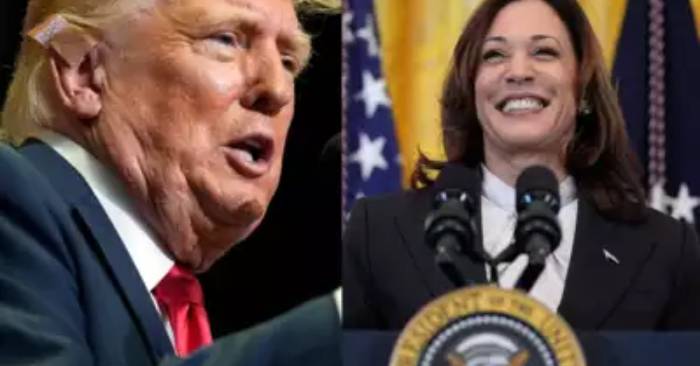
Washington: The United States is witnessing a historic election today, with Americans heading to the polls to determine their next president. This year’s election, expected to have one of the highest voter turnouts, will ultimately come down to the coveted 270 electoral votes needed to secure the presidency. Across the country, polling places are open, with start times varying from 6 a.m. to 8 a.m. in most states, and are set to close between 7 p.m. and 9 p.m. local time. Notably, voters who are already in line by the closing hour will still be allowed to cast their ballots, even if voting extends past the official hours.
This election season places a strong focus on seven key swing states—Arizona, Georgia, Michigan, Nevada, North Carolina, Pennsylvania, and Wisconsin—which together carry 94 crucial electoral votes. Both Vice President Kamala Harris and former President Donald Trump have concentrated their campaign efforts on these pivotal battlegrounds, where polling suggests a tight race. In the face of rising political polarization, voter interest has surged, with early voting turnout reaching unprecedented levels, indicating a deeply engaged electorate.


Financial contributions have also played a critical role, with the 2024 election estimated to be the most expensive in U.S. history. Harris’s campaign has reportedly raised around $1.39 billion, outpacing Trump’s $1.09 billion in funding. Campaign funds have been directed into key strategies, including expansive television advertising and targeted messaging, designed to reach undecided voters across these critical states.
Technology, particularly artificial intelligence, is influencing campaign dynamics as never before. Both parties have leaned heavily on AI-driven data analytics to pinpoint voter segments, optimize outreach, and strategically allocate resources. Social media platforms have become primary channels for campaign messaging and voter engagement, although the role of digital platforms in public discourse has raised concerns over potential misinformation.
With polling already underway in states across the country, the world is closely observing the outcome of this election. As ballot counts begin, the anticipated tight results in swing states are likely to draw out the final tallies, potentially leaving some results unconfirmed until absentee and mail-in votes are processed. In an election that could redefine American policy and international relations, voters are setting a course that resonates beyond U.S. borders, marking a pivotal moment in history.