
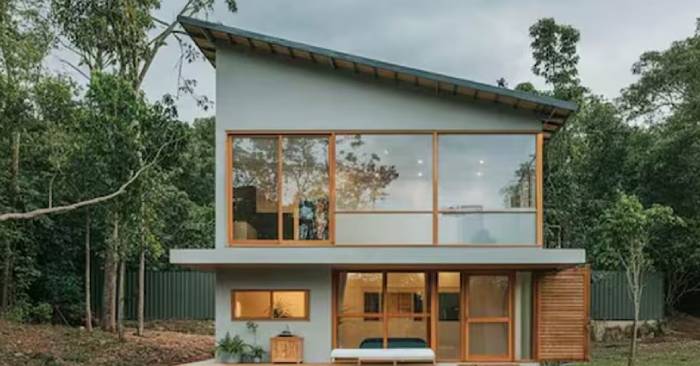
Living in a bustling city like Bengaluru comes with its challenges, including intermittent water supply and power outages. However, amidst these challenges, Ranjan and Reva Malik have embraced a unique way of life in their eco-friendly home that operates without electricity, gas, or even a municipal water connection. This 770-square-foot house stands as a testament to sustainable living and minimalism.
Built using environmentally conscious materials, the house incorporates mud, terracotta, and recycled elements. The roof is made from Mangalore mud tiles and the floors are covered with terracotta tiles, which add to the home’s cooling properties during the hot summer months. The 30-degree slope of the roof allows for efficient rainwater harvesting, which has made a municipal water connection unnecessary for the Malik family. They have a 10,000-liter rainwater harvesting system that provides enough water for their daily needs, even in a city where water scarcity is common.


In terms of energy usage, the house relies heavily on natural ventilation and light, with large windows ensuring ample daylight throughout the day. At night, oil lamps illuminate the space, and solar panels generate the little electricity they need, primarily for charging their electric vehicle. Their food storage is also innovative, with a traditional terracotta fridge that keeps food cool without electricity. To cook, the family uses a solar cooker, eliminating the need for gas connections.
The Malik home is a shining example of how sustainable living can blend seamlessly with modern-day comforts, demonstrating that it’s possible to live independently from external resources while maintaining a connection with nature. Their lifestyle also includes an organic garden nourished by recycled greywater, producing a variety of crops like tomatoes, spinach, and papaya. This home proves that a minimalistic approach, combined with thoughtful design and resourcefulness, can create a harmonious, eco-friendly living space.