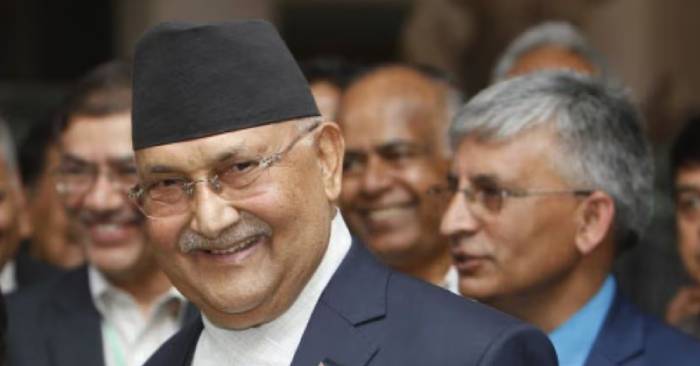
K P Sharma Oli, a seasoned politician known for his history of toppling governments in Nepal and straining relations with India during his previous tenures, faces a significant challenge as he takes on the role of prime minister amidst ongoing political instability.
Oli’s Communist Party of Nepal-Unified Marxist Leninist (CPN-UML), the largest party in the coalition, recently withdrew support from Prime Minister Pushpa Kamal Dahal ‘Prachanda’s government. At 72, Oli parted ways with his former ally Prachanda to form an alliance with Sher Bahadur Deuba, the leader of the Nepali Congress, securing control of Parliament for the rest of its term.


President Ramchandra Paudel appointed Oli as prime minister on Sunday, marking his fourth term in leadership since Nepal abolished its monarchy in 2008 and adopted an interim Constitution.
Oli, viewed as pro-China, defended his party’s decision to realign with the Nepali Congress, emphasizing the need for political stability and development. Gunaraj Luitel, chief editor of Nagarik Daily, suggested that sidelining smaller parties might help stabilize Nepal’s provincial governments, which have struggled with instability due to fragmented party positions.
Oli’s previous terms were marked by strained relations with India and internal political turbulence. During his first term from 2015 to 2016, Oli openly criticized India for alleged interference in Nepal’s internal affairs and accused India of orchestrating his government’s downfall. Despite these tensions, Oli later pledged to strengthen economic ties with India during his second term from 2018 to 2021.
His tenure also saw controversy when Nepal’s Parliament unanimously approved a new political map incorporating disputed territories claimed by India, leading to heightened bilateral tensions. Oli’s provocative statements, such as claiming that the real Ayodhya was in Nepal, further strained relations with India, prompting diplomatic clarifications from both sides.
An anonymous analyst highlighted Oli’s shifting alliances, initially aligning with India and later pivoting towards China, especially evident during the 2015 elections when his party campaigned with an anti-India stance amid a border blockade imposed by India.