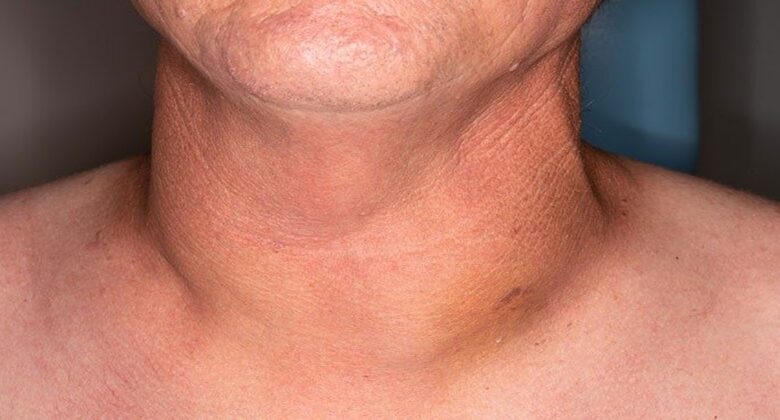
Thyroid cancer is one of the common conditions reported recently. In India, the number of diagnosed cases has grown in recent years, driven partly by better detection and partly by the actual risk changes. National registry estimates show an upward trend in the country’s total cancer burden and project continued increases through 2025. Globally, thyroid cancer disproportionately affects women and accounts for a growing proportion of new cases in higher-resource regions.
Who’s at risk of Thyroid Cancer?

• Women are far more likely to be diagnosed than men. This gap appears from early adulthood and persists throughout middle age. The reasons are complex and may include hormonal influences, greater healthcare contact among women, and biological susceptibility.
• Middle age, with regional variation. Most diagnoses occur in adults between their 30s and 50s, although the age profile varies by region. Some Indian registries report sharply higher rates in certain districts than elsewhere, pointing to local differences in exposures, diagnostic practices or both.
• Prior radiation exposure. Childhood exposure to ionising radiation, for example, therapeutic radiation to the head or neck or fallout from nuclear events, remains the clearest environmental risk factor. The link is well established and appears dose-dependent.
• Family history and genetic syndromes. A small but important fraction of cases, particularly medullary thyroid cancer, occur in families with inherited mutations (RET proto-oncogene), or as part of syndromes such as MEN2. A family history should prompt genetic counselling where appropriate.
• Thyroid disease and autoimmunity. Chronic thyroiditis (such as Hashimoto’s disease) and long-standing nodular thyroid disease are associated with higher detection rates of papillary thyroid cancer, although causal relationships are complex.
• Iodine and diet. Both iodine deficiency and, paradoxically, changes in iodine intake can influence thyroid pathology patterns in populations. Where iodine supplementation has shifted the pattern of thyroid disease, the mix of benign and malignant nodules can change.
• Lifestyle and metabolic factors. Emerging data link obesity and metabolic dysfunction with a modestly increased thyroid cancer risk; research is ongoing to clarify mechanisms.
Indian data summarise lifetime risk in practical terms: recent guideline summaries note that about one in 752 Indian men and one in 285 Indian women may develop thyroid cancer in their lifetimes, figures that make the disease uncommon overall but not vanishingly rare.
Overdiagnosis and the role of diagnostics
A striking feature in several Indian registries is evidence that improved imaging and more frequent neck ultrasounds have led to the detection of very small, indolent tumours, so-called microcarcinomas, that might never have caused symptoms.
• Iodine and diet. Both iodine deficiency and, paradoxically, changes in iodine intake can influence thyroid pathology patterns in populations. Where iodine supplementation has shifted the pattern of thyroid disease, the mix of benign and malignant nodules can change.
• Lifestyle and metabolic factors. Emerging data link obesity and metabolic dysfunction with a modestly increased thyroid cancer risk; research is ongoing to clarify mechanisms.
Indian data summarise lifetime risk in practical terms: recent guideline summaries note that about one in 752 Indian men and one in 285 Indian women may develop thyroid cancer in their lifetimes, figures that make the disease uncommon overall but not vanishingly rare.
Prevention and risk reduction
Most thyroid cancers cannot be prevented entirely. Still, public health measures, appropriate use of diagnostic imaging, targeted surveillance for high-risk individuals, iodine sufficiency programmes and control of childhood radiation exposure are practical levers. Lifestyle measures that reduce obesity and improve metabolic health may also modestly lower risk.
Thyroid cancer is more commonly diagnosed today than it was two decades ago, especially among women and in some urban regions. Distinguishing harmless, tiny tumours found by screening from disease that will harm a patient is the clinical challenge. Precision in testing and care, targeted surveillance, genetic evaluation where indicated, and proportionate treatment best serve those at genuine risk while sparing others needless intervention.