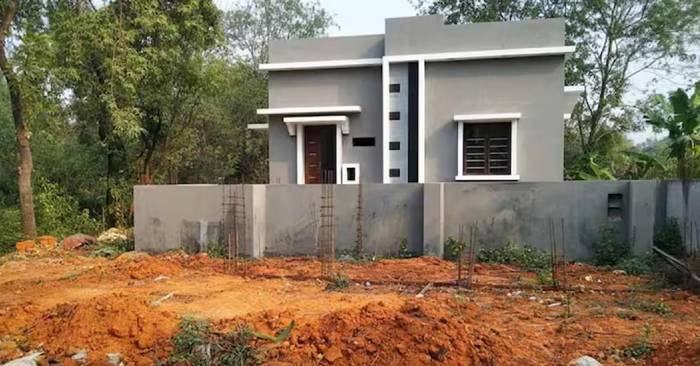
Many people have concerns about whether certain types of land are suitable for house construction. According to Vaastu Shastra, specific guidelines determine the suitability of land, advising against using non-arable land for building homes. This raises questions about whether paddy fields can be converted into residential plots. While paddy fields are arable, Vaastu principles generally discourage constructing homes on them, even if the land is filled and dried. The reasoning is both practical and environmental—farmland is meant for agriculture, and repurposing it for housing reduces valuable cultivation areas. Additionally, constructing a foundation on previously waterlogged land can be costly and pose structural risks.
Can Cemeteries Be Used for House Construction?
Land that has previously served as a cemetery is another concern. Public cemeteries, which serve a communal purpose, should never be used for residential construction. However, private burial sites within family compounds present a more complex situation. If cremation has taken place, the land may be repurposed without major concerns. However, if burials have occurred, construction can be challenging. Traditionally, families converted such land into arable spaces by planting coconut trees, banana trees, or colocasia.


Vaastu principles emphasize that a house should not be built on land where bones are present. However, if bones are completely removed, no major Vaastu defects remain. The real obstacle often lies in psychological discomfort rather than architectural or spiritual concerns. In modern real estate transactions, where land is sold in small plots (such as 5 or 10 cents), it is difficult to thoroughly investigate what lies beneath the surface.
Precautionary Measures Before Construction
Check the history of the land before purchasing it for construction.
Avoid waterlogged or unstable land, as it may cause long-term structural issues.
If bones or remnants are found, ensure complete removal before proceeding.
Choose land that allows proper air circulation and sunlight, following Vaastu principles.
Consider consulting a Vaastu expert to assess the site’s suitability.
Ultimately, while Vaastu guidelines offer valuable insights, practical and environmental factors should also be considered before beginning construction.