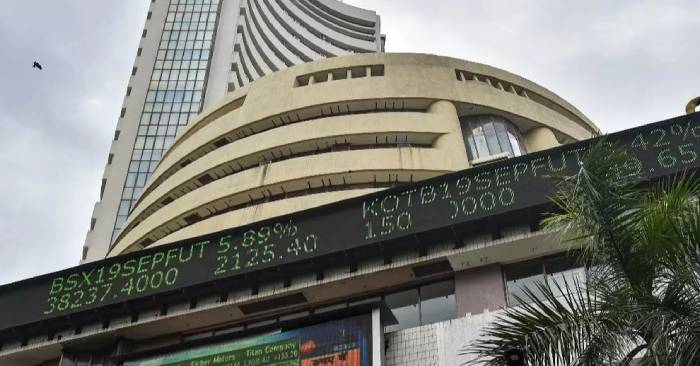
For the sixth consecutive session, the Indian stock market closed in the red on Thursday, as sectors like PSU banks, pharma, FMCG, and metals saw continued selling pressure. The Sensex dropped 110.64 points, or 0.14%, to close at 77,580.31, while the Nifty dipped by 26.35 points, or 0.11%, ending at 23,532.70. Despite the overall downtrend, select segments showed resilience: the Nifty Bank index rose by 91.20 points (0.18%) to reach 50,179.55, and the Nifty Midcap 100 climbed 242.25 points, a gain of 0.45%, to close at 54,043.10. Meanwhile, the Nifty Small Cap 100 index also advanced by 142.15 points (0.81%) to 17,601.05.
The day’s trading witnessed buying in sectors like auto, IT, financial services, real estate, media, private banks, and infrastructure, while PSU banks, pharma, FMCG, and metals remained under pressure. In terms of individual performance on the Sensex, Kotak Mahindra Bank, Tech Mahindra, Mahindra & Mahindra, HDFC Bank, Asian Paints, and JSW Steel emerged as top gainers. Conversely, Hindustan Unilever Limited, NTPC, Nestle India, IndusInd Bank, Power Grid, and Tata Motors ended among the biggest losers.


Experts attribute the market’s downturn to a combination of global economic factors and persistent foreign investor sell-offs. Vikram Kasat of PL Capital noted that a robust U.S. dollar index at 106.61 and a U.S. 10-year bond yield at 4.48% are intensifying pressure on Indian equities. The rupee’s depreciation to a record low of 84.40 against the dollar has compounded these challenges. Market analysts are now looking to upcoming domestic economic data and a potential rebound in government spending—anticipated to pick up post-elections—as potential catalysts for market recovery.