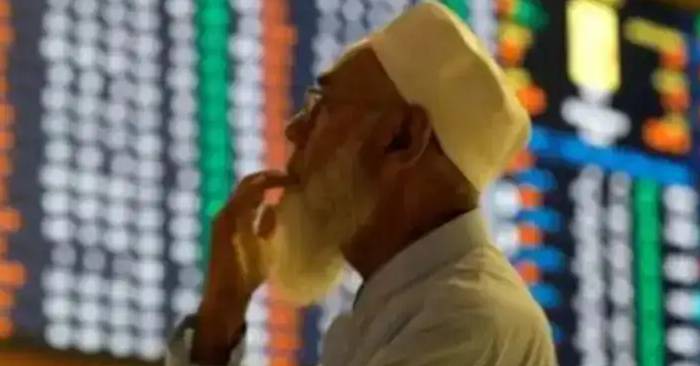
The Pakistan Stock Market suffered a sharp downturn on Wednesday, losing over 1,300 points, following the deadly terrorist attack in Pahalgam, Kashmir, which killed 28 Indians. The attack, attributed to The Resistance Front (TRF), a Pakistan-based terrorist group, has heightened tensions between India and Pakistan, resulting in widespread uncertainty among investors.
The Karachi Stock Exchange saw a significant plunge of 1,303.29 points, or a 1.10% drop, closing at 117,127.06. The immediate market reaction came as fears of possible Indian retaliation grew, causing investors to withdraw funds from Pakistan’s markets. Key Pakistani companies such as United Bank Limited (UBL), Hub Power Company (HUBCO), and Engro Corporation (ENGRO) faced major losses as a result of the turmoil.


The economic impact of rising political and security concerns was also felt in Pakistan’s GDP outlook. The International Monetary Fund (IMF) lowered its growth forecast by 0.4 percentage points, now projecting Pakistan’s GDP to grow at 2.6% instead of the previously expected 3%. Furthermore, the IMF warned that the Pakistani Rupee might continue its decline due to fiscal pressures and the widening current account deficit.
In contrast, India’s stock market displayed resilience. The Bombay Stock Exchange (BSE) Sensex surged by 520.90 points, closing at 80,116.49, marking its seventh consecutive day of gains. This robust performance reflects confidence in India’s strong macroeconomic fundamentals, reassuring investors amid the rising geopolitical tensions.