A curious narrative has begun circulating in parts of India’s political and media discourse. Following reports that the United States eased tariff pressures and allowed a temporary window for India to continue purchasing Russian crude amid the ongoing Iran–US–Israel tensions, some Opposition voices have suggested that India needs “permission” from Washington to buy oil from Moscow.
This interpretation is misleading. More importantly, it reflects a misunderstanding of how India conducts its energy diplomacy and economic policy.


Let us start with the facts.
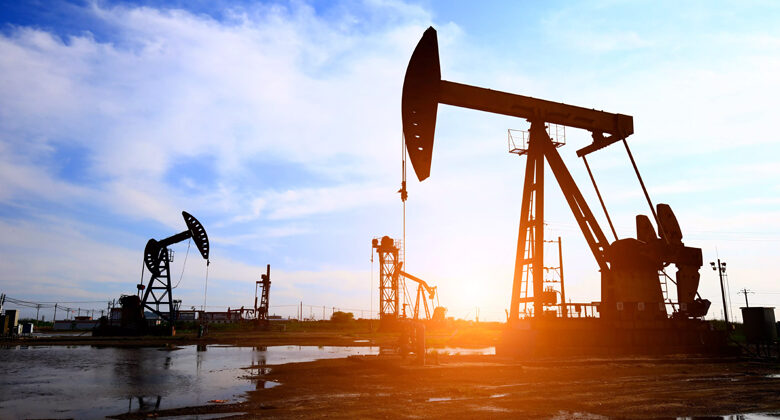
In February 2026, Russia remained India’s largest crude oil supplier. Indian refiners imported roughly 1.0 to 1.7 million barrels of Russian crude per day, accounting for about 25–30% of India’s total oil imports. Over the course of the month, this translated to approximately 28–48 million barrels of Russian oil entering India.
In simpler terms, India has been purchasing around 10 lakh barrels of Russian oil every day.
These figures alone undermine the claim that India’s energy decisions are dictated by any external power.
If India truly required American “permission” to buy Russian oil, such large-scale imports would simply not exist. Instead, they continue because India’s energy policy is guided by a straightforward principle: energy security for 1.4 billion people.
Oil is not a diplomatic favour. It is a strategic necessity.
India imports more than 85% of its crude oil requirements. Under these circumstances, the government must constantly balance price, supply stability, geopolitical risk and domestic inflation. Every barrel purchased at a discounted rate affects the cost of transportation, manufacturing, electricity generation and, ultimately, household budgets across the country.
This is precisely why India diversified its energy sources after the Ukraine war began in 2022. Russian crude became attractive because it was available in large volumes and at competitive prices. Indian refiners responded pragmatically, and the government supported a strategy aimed at protecting consumers from global price shocks.
That approach continues today.
Yes, India remains in regular dialogue with the United States, just as it engages with Russia, Gulf producers and other suppliers. Diplomatic interactions between major economies naturally involve trade negotiations, tariffs and political messaging. But portraying such discussions as “permission” fundamentally distorts their meaning.
New Delhi has consistently maintained that its energy purchases are determined by market conditions and national interest. Even after Washington announced punitive tariffs linked to Russian oil purchases, India did not halt imports. Instead, it continued to diversify supply sources while maintaining engagement with multiple partners.
That is not submission. It is strategic autonomy.
The current geopolitical climate only reinforces this approach. With tensions rising in West Asia and reports of disruptions such as Qatar temporarily halting gas production due to the conflict, global energy markets are facing renewed uncertainty. In such conditions, a responsible government must broaden its procurement channels rather than restrict them.
Russia remains one of those channels.
India’s oil policy is therefore neither ideological nor externally dictated. It is pragmatic, sovereign and rooted in economic necessity.
Those who claim that India requires approval from foreign capitals to buy oil overlook a simple reality: countries of India’s scale do not outsource their energy decisions. They negotiate, diversify their sources and secure the best possible deal for their citizens.
And that is exactly what India is doing.