India’s LPG pricing policy has come under political scrutiny after the Union government approved a ₹60 increase in domestic cooking gas prices on March 7, 2026. Opposition leaders quickly framed the decision as evidence that the government had failed to shield households from rising energy costs.
However, such criticism overlooks the broader economic and geopolitical forces shaping India’s energy market.


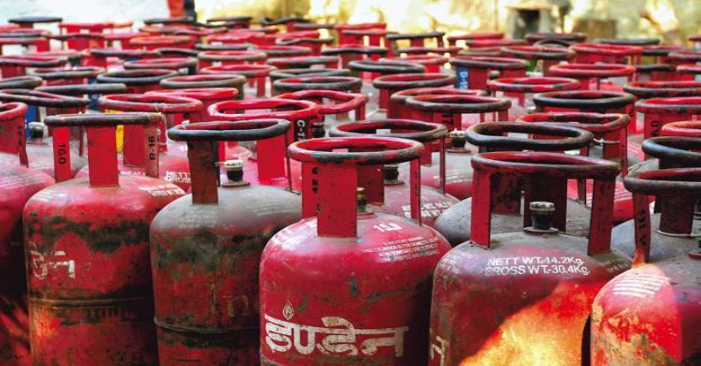
The price of a non-subsidised 14.2-kg LPG cylinder — used by most households — rose from ₹853 to ₹913 in Delhi, according to the Indian Oil Corporation. The revision followed a surge in global energy prices triggered by escalating tensions in West Asia.
Even after the increase, the retail price remains well below the roughly ₹1,050 per cylinder required for oil marketing companies to break even. In other words, a substantial portion of the global price shock is still being absorbed within the system.
When viewed in terms of household consumption, the actual impact is modest. The average family uses four to five cylinders annually. Spread over a year, the ₹60 increase amounts to about 80 paise per day for a household — or roughly 20 paise per person per day in a family of four.
Understanding this price adjustment requires looking beyond political rhetoric and examining the realities of India’s LPG supply chain.
Global Energy Shock, Not Domestic Policy Failure
India imports roughly 60 percent of its LPG requirements, making domestic prices closely linked to global markets. The key benchmark for international LPG trade is the Saudi Contract Price (Saudi CP), which reflects global supply-demand dynamics.
Over the past two years, global LPG prices have climbed sharply. Between July 2023 and November 2025, the Saudi CP rose about 21 percent, increasing from roughly $385 per metric tonne to around $466.
In a purely market-linked system, such an increase would have led to significantly higher prices for consumers in LPG-importing countries.
India, however, followed a different path.
During the same period when global prices were rising, the domestic price of LPG in India actually fell by about 22 percent — from ₹1,103 per cylinder in August 2023 to ₹853 by November 2025.
This divergence did not occur by accident. It resulted from deliberate government intervention aimed at shielding consumers from international volatility.
Even today, the estimated supply cost of a domestic LPG cylinder is around ₹950. Despite this, non-subsidised consumers in Delhi pay ₹913, while subsidised households pay even less.
In effect, the government has consistently absorbed a large share of global price increases instead of passing them entirely to consumers.
The West Asia Conflict and the Strait of Hormuz
The timing of the latest price revision is closely linked to geopolitical developments in West Asia.
In early March 2026, escalating tensions in the region slowed tanker movements through the Strait of Hormuz — one of the world’s most critical energy shipping corridors. Nearly one-fifth of global oil shipments and a substantial share of LPG cargoes pass through this narrow waterway.
For India, the strategic importance of this route is particularly significant. Nearly 60 percent of the country’s LPG imports transit through Hormuz.
When security concerns disrupt shipping in this corridor, global markets react quickly. Insurance premiums rise, shipping schedules are disrupted, and supply constraints push prices higher across international markets.
No energy-importing country — whether India, Japan, or those in Europe — can fully insulate itself from such geopolitical shocks.
Framing the LPG price increase as a purely domestic policy failure ignores the fundamental reality that the trigger lies in global supply disruptions beyond India’s control.
Government Absorbed Most of the Price Surge
Perhaps the most overlooked aspect of the current debate is that the ₹60 increase represents only a fraction of the global price surge.
Between November 2025 and February 2026, the Saudi CP jumped by nearly 16 percent. Under normal market conditions, this would have translated into a domestic price increase of more than ₹130 per cylinder.
Instead, the government held retail prices steady for several months while oil marketing companies absorbed rising import costs.
When the adjustment finally came in March, it was limited to ₹60 — less than half the increase implied by global market movements.
In effect, the government absorbed more than half the global price shock on behalf of consumers.
India Still Among the Most Affordable in the Region
Despite the recent revision, India continues to maintain one of the most affordable LPG systems in South Asia.
As of March 2026, a 14.2-kg LPG cylinder in Delhi costs about ₹913. Comparable cylinders cost significantly more in neighbouring countries.
Consumers in Kathmandu pay roughly ₹1,207. In Sri Lanka, prices are around ₹1,241, while Pakistani consumers pay approximately ₹1,046.
Maintaining relatively lower prices for more than 30 crore LPG consumers requires careful fiscal management and logistical coordination.
This affordability is not accidental — it reflects a policy decision to prioritise household energy security.
Protecting the Poor Through Ujjwala
A key pillar of India’s LPG policy is the Pradhan Mantri Ujjwala Yojana, which provides clean cooking fuel access to low-income households.
More than 10.5 crore families are now connected to LPG through the programme. These households remain largely insulated from price fluctuations.
Under the current structure, Ujjwala beneficiaries receive a subsidy of ₹300 per cylinder. This reduces the effective price to around ₹613.
As a result, the poorest households have not experienced the latest price revision in any significant way.
The Fiscal Cost of Consumer Protection
Shielding consumers from global price volatility carries a substantial fiscal cost.
In the 2024–25 financial year, India’s public sector oil marketing companies — Indian Oil, Bharat Petroleum, and Hindustan Petroleum — recorded LPG under-recoveries of nearly ₹39,000 crore while selling cylinders below cost.
To ensure supply continuity, the government approved a compensation package of ₹30,000 crore.
Rather than transferring the entire burden to consumers, the state absorbed a large portion of the global price shock.
The Real Impact on Household Budgets
Political debate often focuses on headline price increases without considering actual consumption patterns.
Most households use one LPG cylinder roughly every 70–80 days. Spread over this period, the ₹60 increase amounts to about 80 paise per day.
In practical terms, the increase is less than the cost of a cup of tea per week.
Such calibrated adjustments allow the supply system to remain financially viable while keeping household budgets largely unaffected.
Managing Supply and Preventing Shortages
To prevent panic buying and artificial shortages, the government temporarily increased the minimum gap between LPG refill bookings from 21 days to 25 days.
Officials emphasised that the move is a demand-management measure designed to ensure fair distribution.
Average delivery time remains around two and a half days. Systems such as the Delivery Authentication Code have also been introduced to prevent diversion and ensure cylinders reach genuine consumers.
Strengthening Domestic Supply
The government has also invoked provisions of the Essential Commodities Act to strengthen domestic LPG availability.
Refineries have been instructed to maximise the production of propane and butane — the key components used to produce LPG.
Industrial use and export commitments have been temporarily deprioritised to ensure household cooking gas remains the top national priority.
Domestic LPG production has already increased by roughly 25 percent.
Diversifying Energy Imports
India is also reducing its dependence on Middle Eastern energy suppliers.
A major agreement with US producers will bring around 2.2 million tonnes of LPG annually from the US Gulf Coast beginning in 2026. The supply will be priced against the Mont Belvieu benchmark and will account for about 10 percent of India’s imports.
Diversifying sourcing reduces exposure to geopolitical disruptions in any single region.
Stronger Energy Security Than in the Past
Comparisons with the 1991 economic crisis often appear in political debates but overlook how dramatically India’s economy has changed.
In 1991, India’s foreign exchange reserves had fallen to barely $1–1.2 billion — enough for only a few weeks of imports.
Today, reserves exceed $700 billion.
Combined with strategic petroleum reserves and diversified supply chains, this provides India with far greater resilience against global shocks.
A Managed Adjustment, Not an Energy Crisis
Global energy markets remain volatile, particularly amid geopolitical tensions. But India’s energy strategy — built on diversification, targeted subsidies, strategic reserves, and fiscal support — is designed to manage such volatility.
The recent LPG price increase is not evidence of a systemic failure.
Rather, it represents a controlled adjustment in response to a global energy shock — one in which the government has absorbed a significant share of the burden to protect households.
And the fact that India continues to maintain one of the most affordable LPG systems in the region suggests that the broader strategy remains intact.