
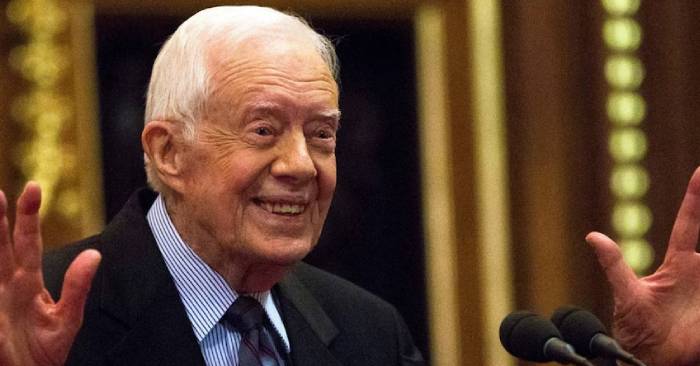
Jimmy Carter, the 39th President of the United States and a celebrated humanitarian, passed away at his home in Plains, Georgia, at the age of 100. Known for his unwavering commitment to peace and human rights, Carter left behind a legacy that transcended his turbulent presidency. His son, Chip Carter, remarked, “My father was a hero not only to me but to everyone who believes in peace, human rights, and unselfish love.”
Carter’s presidency (1977–1981) was marked by notable achievements like the 1978 Camp David Accords, which brought peace between Egypt and Israel, and the establishment of the Departments of Energy and Education. However, his term was also overshadowed by economic challenges and the Iran hostage crisis, which contributed to his defeat by Ronald Reagan in the 1980 election.


Despite his struggles in office, Carter emerged as a respected global figure in his post-presidential years. He founded the Carter Center, championed democratic values, mediated international conflicts, and earned the 2002 Nobel Peace Prize for his efforts. A devout Southern Baptist, he combined faith with diplomacy, focusing on humanitarian missions worldwide.
Carter’s life reflected humility and service, from his modest beginnings as a peanut farmer to becoming a voice for the disenfranchised. His extraordinary legacy remains an inspiration for global peace, compassion, and leadership. Public tributes and private interments are planned to honor his life and contributions.