In a significant legal development, the US Court of International Trade has halted the implementation of President Donald Trump’s broad-based import tariffs, ruling that the president exceeded his constitutional authority. The three-judge panel stated that the exclusive power to regulate international commerce lies with Congress, and this cannot be overridden even by presidential emergency powers under the International Emergency Economic Powers Act (IEEPA).
The court clarified that it did not challenge the logic or effectiveness of using tariffs to manage trade, but found such action legally impermissible under current law. In response, the Trump administration swiftly filed a notice of appeal, questioning the court’s jurisdiction and authority. The matter could now advance to the Federal Circuit Court and potentially the US Supreme Court.


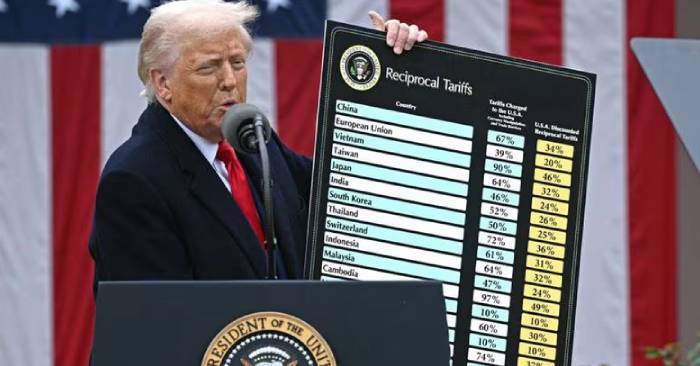
The blocked tariffs were part of Trump’s strategy to reduce the $1.2 trillion US trade deficit, mainly targeting China and other nations with significant trade imbalances. The tariffs, ranging from 10% to 54%, were justified by Trump as a response to a “national emergency” caused by persistent trade deficits. However, critics and legal experts argue that the IEEPA was never intended to be used for tariff imposition.
The ruling originated from lawsuits filed by 13 US states and several small businesses represented by the Liberty Justice Center, who claimed the tariffs would damage their operations. Industries involved included importers of educational materials, wine, and musical instruments.
The White House, in defense, insisted the trade deficit is a national emergency impacting American workers and manufacturing. A spokesperson criticized the court for intervening in what they described as executive decision-making during national crises.
Financial markets responded positively to the ruling, with the US dollar gaining strength and stock indices seeing upward momentum. Meanwhile, at least five other legal cases challenging the tariffs remain pending, as the debate continues over the scope of presidential authority in trade matters.