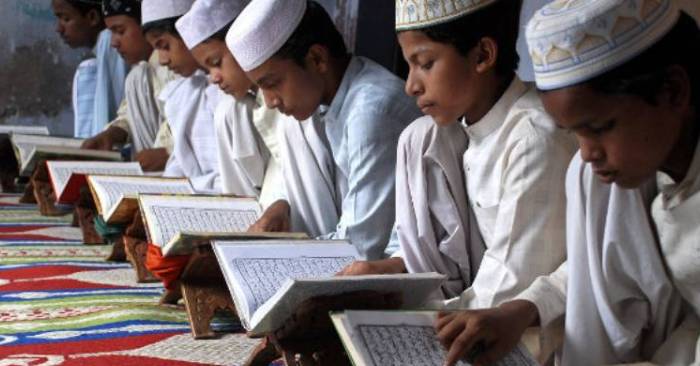
The National Commission for Protection of Child Rights (NCPCR) has stirred considerable controversy by urging states and union territories to cease funding madrasas and to close madrasa boards. In a letter dated October 11, NCPCR Chairperson Priyank Kanoongo emphasized the need to transition children attending madrasas into formal education systems that adhere to the Right to Education (RTE) Act of 2009. This proposal has elicited mixed reactions from political parties and education advocates alike.
According to the NCPCR, the exemption of religious institutions from the RTE Act has resulted in significant gaps in educational quality and access for children attending these schools. The commission’s report claims that many madrasas fail to comply with the educational standards set by the RTE, with issues such as inadequate teaching staff and questionable curricular content. Kanoongo’s letter specifically points out that madrasas often lack qualified teachers, leading to a reliance on traditional methods that may not align with modern educational requirements. Additionally, the report alleges that certain madrasa curricula include objectionable materials and promote the supremacy of Islam, further complicating the educational landscape.


Political responses have been varied. While some party members express concerns about the motivations behind the NCPCR’s recommendations, others call for a thorough investigation into the operations of madrasas to identify any irregularities. Critics, including members of the Samajwadi Party, have labeled the letter as politically charged, suggesting that it aims to sow division within society and overlook the positive contributions of many madrasas.
The NCPCR argues that immediate action is necessary to protect children’s rights to quality education. By recommending the removal of non-Muslim children from madrasas and pushing for all students to be enrolled in formal educational institutions, the commission seeks to ensure that every child receives a comprehensive and equitable education. However, the implementation of such drastic measures raises questions about the future of madrasas and their role in the educational framework, as many serve as crucial support systems for underprivileged communities.
In conclusion, the NCPCR’s stance marks a significant shift in the discourse around religious education in India, highlighting the ongoing debate over child rights, educational standards, and the secular nature of the country’s educational policies.