New Delhi: The Bharatiya Janata Party (BJP) made a historic comeback in Delhi by securing 48 out of 70 Assembly seats, marking the end of the Aam Aadmi Party’s (AAP) decade-long rule. This landslide victory shattered AAP’s stronghold, reducing it to just 22 seats and shaking its once-dominant position in the capital’s political landscape.
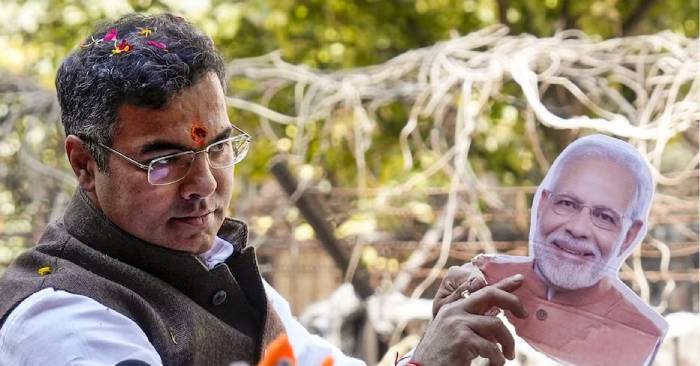
With BJP’s massive electoral success, the focus has now shifted to who will be the party’s chief ministerial candidate. Among the frontrunners is Parvesh Verma, who achieved a significant political upset by defeating AAP’s national convener and outgoing Chief Minister Arvind Kejriwal in the New Delhi constituency. However, Verma has maintained that the final decision will rest with the party leadership.


Verma, son of former Delhi Chief Minister Sahib Singh Verma, expressed gratitude for the overwhelming support from voters, calling the victory a mandate for truth, governance, and development. “This is a win for every citizen who placed their faith in the BJP. The people of Delhi have chosen real progress over false promises,” he stated. He credited Prime Minister Narendra Modi, Home Minister Amit Shah, and BJP president J P Nadda for steering the party towards this decisive triumph.
Verma further asserted that the BJP’s focus would be on addressing key issues such as air pollution, traffic congestion, unemployment, and the rehabilitation of villages and colonies. He accused Kejriwal of failing to deliver tangible results, stating that much of AAP’s achievements were more about publicity than actual governance.
In a symbolic gesture following his victory, Verma, accompanied by Manjinder Singh Sirsa, who won from Rajouri Garden, visited Bangla Sahib Gurudwara to seek blessings. Sirsa also attributed AAP’s downfall to the party’s failure to fulfill its promises.
Despite this heavy defeat in Delhi, AAP still maintains its relevance on the national stage. It continues to govern Punjab with a strong mandate and holds 13 parliamentary seats, including 10 in the Rajya Sabha (seven from Punjab and three from Delhi) and three in the Lok Sabha from Punjab. However, Kejriwal’s governance model—focusing on free electricity, water, and education reforms—failed to resonate with voters this time. His attempt to introduce elements of soft Hindutva, such as promising a stipend for temple priests, also did not gain traction.
While the BJP’s resounding victory marks the beginning of a new political chapter in Delhi, AAP remains a force to be reckoned with at the national level. With Punjab still under its control, the party will likely regroup and strategize for future electoral battles.