
Astronomers in Australia have detected a mysterious cosmic object, ASKAP J1832- 0911, emitting radio and X-ray bursts every 44 minutes, an unprecedented occurrence. This long-period transient defies existing stellar remnant theories with its rhythmic pattern. An international team had recently reported that the object, located about 15,000 light-years away, could be a highly magnetised dead star, such as a neutron star or white dwarf, or possibly something unknown.
The object, named ASKAP J1832- 091, was first spotted emitting X-rays by NASA’s Chandra X-ray Observatory last year during a routine observation of a nearby supernova remnant. It is the first time scientists have observed X-rays coming from a so-called “long-period radio transient”, rare objects that send out radio bursts over long intervals. The signals appear to repeat every 44 minutes and were observed during a brief, month-long active phase.


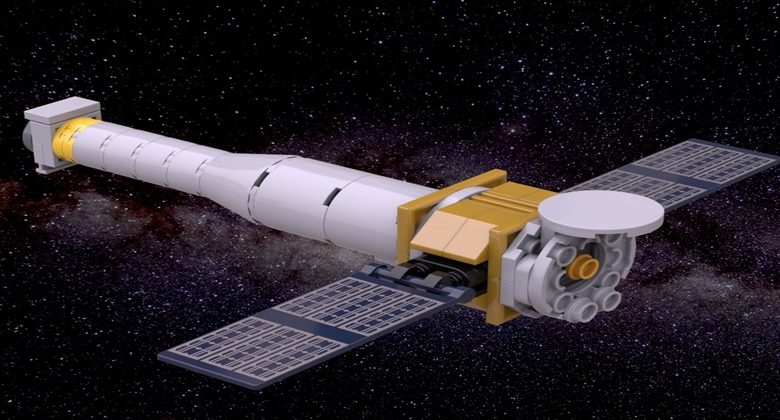
Outside that period, the object emitted no detectable X-rays, researchers said. Due to the dense star field in the region and the uncertainty of the object’s exact location, astronomers are unsure if it is related to the nearby supernova remnant.NASA launched the Chandra X-ray Observatory in 1999 to study high-energy phenomena in deep space. It continues to orbit Earth, providing critical data on some of the universe’s most extreme objects.
How does the mysterious object ASKAP behave?
ASKAP J1832- 0911 doesn’t behave like any known star or pulsar. While typical pulsars emit rapid pulses lasting milliseconds or seconds, this object produces signals at much longer and consistent intervals. It “switches on” and “switches off” every 44 minutes, a rhythmic pattern that puzzles scientists. This behaviour defies existing theories of stellar remnants, which generally operate on much shorter timescales. The precise timing and strength of these signals suggest a mechanism we have yet to fully understand. With no known counterparts in current astrophysical databases, this object may represent a new class of transient phenomena in deep space.