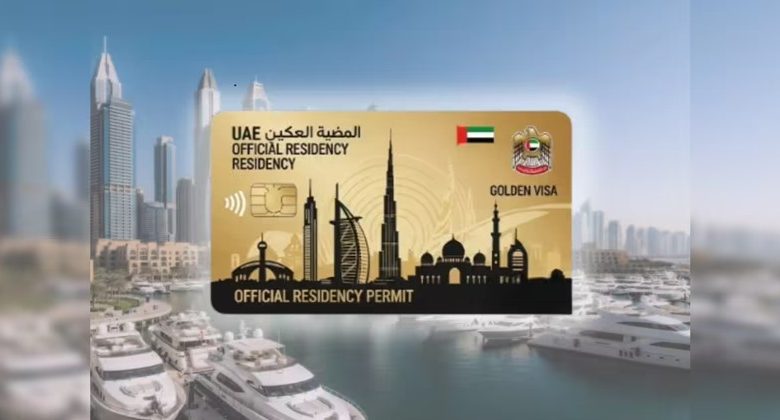
The UAE has swiftly moved to dispel a series of misleading claims circulating in foreign media and online platforms about the highly sought-after Golden Visa programme. In a statement sent exclusively to Middle East media on Wednesday, a day after the Federal Authority for Identity, Citizenship, Customs and Ports Security (ICP) issued a strong statement debunking such claim of “lifetime visa” arrangement, Rayad Group said: “(We) acknowledge the recent media coverage and public discussions regarding a purported nomination-based UAE Golden Visa initiative, including references to a fixed Dh100,000 fee and a so-called “lifetime visa” arrangement.
“To clarify, the initiative in question was part of an exploratory collaboration between the Rayad Group and licensed partners specialising in immigration services. This effort (was) aimed (at assessing) the feasibility of providing advisory support for Golden Visa applications to eligible individuals, particularly those aligned with the strategic priorities of the UAE.” On Tuesday, July 8, the ICP debunked rumours “circulating in some local and foreign media and websites about the UAE granting a lifetime Golden Visa for some nationalities.”


The ICP underscored “all UAE Golden Visa applications are managed exclusively through official government channels within the country, and no internal or external advisory body is considered an approved party in the application process.” “The categories of golden residence, their conditions and controls are determined by the UAE laws, legislation and official ministerial decisions,” ICP added, noting: “Those wishing to know the requirements for the UAE Golden Visa can obtain them through the ICP website or smart application.”
UAE Golden Visa rumours: what you need to know
Rumour 1: Lifetime UAE residency granted to certain nationalities in exchange for a one-time fee of Dh100,000 (INR 23.3 lakh), with no property or business investment required. This supposedly applies to professionals such as nurses, teachers, researchers, digital creators, maritime specialists, and others.
Is this true? No. The ICP debunked rumours “circulating in some local and foreign media and websites about the UAE granting a lifetime Golden Visa for several nationalities.” It underscored, “All UAE Golden Visa applications are managed exclusively through official government channels within the country, and no internal or external advisory body is considered an approved party in the application process.” Authorities urged the public not to fall for misleading rumours or fraudulent offers promising quick visa approvals. Individuals are advised not to pay any fees or share personal documents with unverified entities claiming to provide Golden Visa services.
Rumour 2: Individuals investing in cryptocurrencies can qualify for UAE Golden Visas based on their digital asset investments. Recently, Max Crown, CEO of the Ton Foundation, which manages the Telegram-based crypto ecosystem, said on X, that Toncoin holders can now acquire the UAE’s much sought-after Golden Visa by staking TON. He claimed that Ton holders have “the exclusive chance to secure a 10-year Golden Visa” after a one-time fee of $35,000, along with other conditions.
Is it true? Not. The UAE immigration agency, alongside the SCA (Securities and Commodities Authority) and Vara (Virtual Assets Regulatory Authority), has officially denied this claim. UAE authorities have refuted claims that investors in the cryptocurrency Toncoin were granted the country’s Golden Visa.
Rumour 3: The salary requirement for the UAE Golden Visa under the skilled professional category was changed to basic salary only. Last year, social media chatter and unverified reports led to widespread confusion among professionals aiming for the UAE’s long-term visa. Rumours suggested that the authorities planned to scrap the minimum total monthly salary threshold of Dh30,000 and instead require a basic salary of Dh30,000 for eligibility under the skilled professional category.
Is this true? No. There are no changes to the salary criteria for the skilled worker pathway. If an expat works for a mainland company, their contract must show a total salary of Dh30,000 or above. For those employed by a free zone company, a salary certificate issued by the relevant free zone authority is necessary, confirming a salary of Dh30,000 or more.