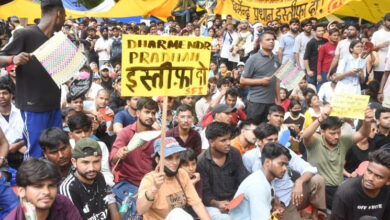
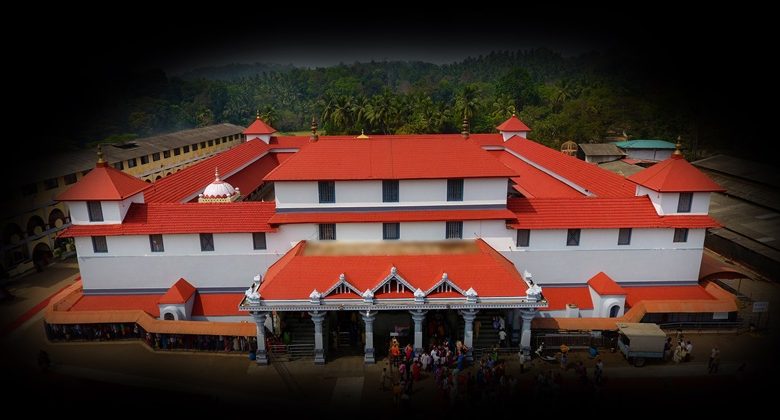
For centuries, Sri Kshetra Dharmasthala has stood as a beacon of faith, charity, and service. But in recent months, its sanctity has come under the light of questions not from proven wrongdoing, but from a carefully spun web of misinformation.
The most prominent example is the so-called ‘Ananya Bhat’ case – a sensational social media story alleging that a Kasturba Medical College student disappeared in Dharmasthala in 2003, her case allegedly buried by powerful forces. This tale resurfaced when a whistleblower, a former sanitation contractor who worked in Dharmasthala from 1995 to 2014, claimed he had been forced to dispose of bodies linked to criminal activities.


He recently revisited alleged burial sites, photographed skeletal remains, and submitted the images to authorities, sparking an SIT probe. It was only after this that Sujatha Bhat, claiming to be Ananya’s mother and a former CBI officer, came forward after decades of silence. She attempted to link her daughter’s disappearance to the whistleblower’s claims. But the facts tell a different story.
Kasturba Medical College records confirm no student named ‘Ananya Bhat’ has ever been enrolled. There are no credible witnesses, no verified documentation, and no trace of the case in police or media archives from 2003. The narrative’s amplification owes much to activist Mahesh Shetty Thimarodi, a man with a documented history of disputes with Dharmasthala’s administration.
His aggressive campaign, masked as a people’s movement, has instead sown distrust, confusion, and communal tension. Allegations from a disgruntled ex-contractor with a history of misconduct add no credibility, yet in the digital age, these claims spread faster than fact-checks can catch up.
What’s at stake here is bigger than a single fabricated story. When unverified claims are repeated, shared, and politicised, centuries-old institutions risk being judged not by evidence, but by viral outrage. Dharmasthala’s image is being tarnished not by truth, but by an industrial-scale disinformation campaign that thrives on public gullibility and social media virality.
‘Hundreds of bodies’: What’s in the complaint?
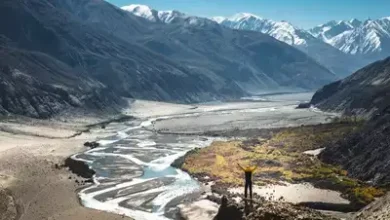
Dharmasthala, an 800-year-old pilgrimage village, is located on the banks of the Nethravathi River in the Belthangady area of the Dakshina Kannada district in Karnataka state, where nearly 2,000 devotees visit daily.
On July 11, the man, fully draped in black clothing with only a transparent strip covering his eyes, appeared at a local court in Belthangady to record his statement.
The complainant, who belongs to the Dalit community – the least privileged and often persecuted group in India’s complex caste hierarchy – joined the temple in 1995 as a sanitation worker.
At the beginning of his employment, he said in the complaint, he noticed dead bodies appearing near the river. “Many female corpses were found without clothes or undergarments. Some corpses showed clear signs of sexual assault and violence; injuries or strangulation marks indicating violence were visible on those bodies,” he noted.
However, instead of reporting this to authorities at the time, the man said he was forced to “dispose of these bodies” after his supervisors beat him up and threatened him, saying, “We will cut you into pieces; we will sacrifice all your family members.”
The supervisors, he claimed, would call him to specific locations where there were dead bodies. “Many times, these bodies were of minor girls. The absence of undergarments, torn clothes, and injuries to their private parts indicated brutal sexual assault on them,” he said. “Some bodies also had acid burn marks.”
The man has told the police and the court that he is ready to undergo any tests, including brain-mapping and a polygraph, and is willing to identify the spots of mass burials. Some sites are likely to be exhumed in the coming days.
In the nearly 20 years he worked at the temple, the man said he “buried dead bodies in several locations throughout the Dharmasthala area”. Sometimes, as instructed, he burned dead bodies using diesel. “They would instruct me to burn them completely so that no trace would be found. The dead bodies disposed of in this manner numbered in the hundreds,” he said.