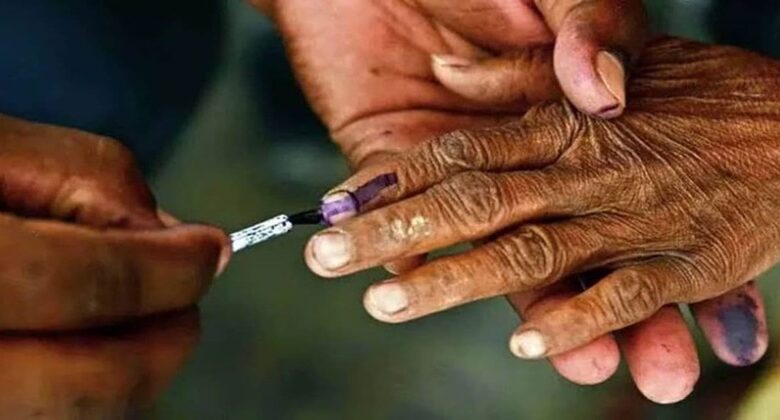
Keralam’s track record of producing clear electoral winners is facing a major test. Heading into the 2026 Assembly polls, the traditional stability of the state’s political blocks is wavering. This time, instead of a landslide or a clear majority, signs point to a neck-and-neck struggle that could result in a rare, unresolved verdict.
Past trends show that a divided local body verdict often leads to a photo-finish in the Assembly polls. The 2025 outcome reinforces this, with the LDF and UDF deadlocked at seven district panchayats apiece—a recurring balance that suggests a tight race ahead for 2026.


In 2010, the UDF won 8 of the 14 district panchayats, with the LDF securing the remaining 6, reflecting a closely contested local verdict. The Assembly election that followed in 2011 reflected that parity, with the UDF forming the government with 72 seats, just ahead of the LDF’s 68. It was a narrow win, shaped by fine margins rather than a sweeping wave.
The most important factor this time is a major shift in Keralam’s political equation, the rise of the BJP as a third force. In 2011, its presence was limited, with a vote share below ten per cent and little impact on results. Today, the BJP may not dominate statewide, but it has emerged as a factor that can influence results in multiple constituencies.
Even a modest performance, five to eight seats, could be enough to alter the balance between the LDF and the UDF. These seats will not come in isolation. They will come at the expense of one of the two fronts, tightening margins and making the path to a majority far more difficult.
This dynamic is already visible in constituencies like Manjeshwaram and Palakkad, where the BJP is strongly contesting against the UDF. Similar triangular contests are expected in Thiruvananthapuram, Vattiyoorkavu, Nemom, Kazhakkoottam, Attingal, Thiruvalla and Thrissur. In these seats, even small shifts in vote share can change the result.
Earlier, a balanced local body result still allowed one front to cross the majority mark. Now, with a third force in play, that margin becomes harder to achieve. Even if both the LDF and UDF remain within the familiar range of 68 to 72 seats, neither may be able to push beyond it. Unlike previous elections, there is no single dominant issue shaping voter sentiment across the state. Topics such as Sabarimala, public debt, crime, or corruption are not uniformly influencing voters. Instead, politics has become more local, more fragmented and more dependent on constituency-level dynamics.
While there may be a general sense of dissatisfaction with the government in some sections, it is not translating into strong anti-incumbency against individual MLAs. Several leaders within the LDF continue to retain personal acceptance in their constituencies.
Among the 98 seats currently held by the LDF in 140 seat assembly, several leaders continue to retain personal acceptance in their constituencies. There is little indication of strong resistance against Saji Cherian in Chengannur, and Chief Minister Pinarayi Vijayan is not widely seen as vulnerable in Dharmadam. Ministers such as Chinchu Rani in Chadayamangalam and G R Anil in Nedumangad continue to hold their ground. In some cases, leaders like Mohammed Riyas are even witnessing favourable sentiment.
Even if the LDF were to lose around 30 seats from its current tally of 98, it could remain close to 68 seats, just around the majority mark. But in a scenario where the BJP manages to secure between five and ten seats, the balance shifts again. The result could then move towards a tightly contested Assembly, where no single front is able to secure a clear majority. Even in a favourable scenario, crossing the majority mark of 71 becomes difficult when votes are split three ways in key constituencies. The margin for error becomes smaller, and every seat becomes more competitive.
Political strategies are already adapting to this reality. Instead of relying on broad statewide narratives, parties are focusing more on constituency-level issues, candidate strength and local factors. This is what makes the 2026 election different. A closely contested Assembly is no longer just a possibility. For Keralam in 2026, it is increasingly emerging as the most likely result. The verdict will be clear on May 4.