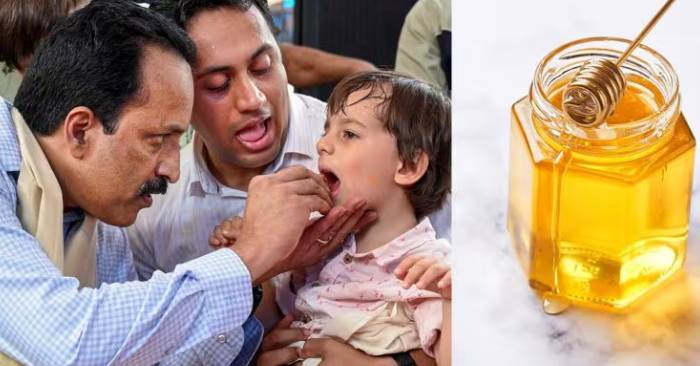
As South India prepares to celebrate the Vidyarambham ceremony during Navaratri, one of the key rituals involves using honey and “vayambu” (sweet flag) in initiating children into the world of knowledge. Honey, known as “then” in Malayalam, is mixed with “vayambu,” a medicinal herb also called Acorus Calamus, and is used to write the first alphabet on a child’s tongue with a gold ring. But this ancient practice is not only rooted in tradition, it also has Ayurvedic medicinal value.
Dr. Sreelatha Chandroth from the Government Ayurveda Medical College, Kannur, highlights the significance of this combination. She explains that “vayambu” is a brain stimulant with nourishing properties known as “nedyam” in Ayurveda. When combined with honey, which helps balance the Kapha dosha often associated with childhood ailments like colds, the mix becomes a powerful remedy. Honey is also believed to carry “Lakshmivasam” (the presence of the goddess of prosperity, Lakshmi), adding a spiritual dimension to its many medicinal benefits.


According to Dr. Dinesh K S of Vaidyaratnam PS Varier Ayurveda College, Kottakkal, while this honey-vayambu mix is a longstanding Ayurvedic practice, it holds special ceremonial value during Vidyarambham. He explains three traditional ways to prepare the mixture. One method involves rubbing a “vayambu” stem three times on a grinding stone, adding honey, and applying it to the child’s tongue. Another technique uses a gold rod inserted into the “vayambu” stem, which is then rubbed on a stone. A third method involves mixing 50 milligrams of gold dust with 5 grams of “vayambu” and 300 milligrams of honey, stirring the mixture for six hours to achieve the right consistency.
This combination, often available in markets as “swarnaprasam,” is not just for children. Many elders also consume it, highlighting its broader health benefits. Despite its ceremonial role, the honey-vayambu mix remains a time-honored remedy in Ayurveda, appreciated for both its medicinal and spiritual significance.