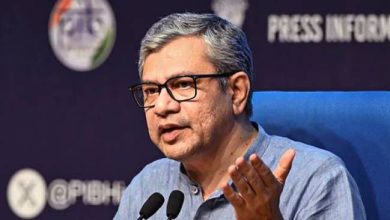

In her seventh consecutive Budget presentation, Union Finance Minister Nirmala Sitharaman outlined nine priority areas aimed at comprehensive development and generating ‘ample opportunities’ for all. These priorities included agriculture productivity and resilience, employment and skilling, improved human resources, social justice, manufacturing and services, urban development, energy security, infrastructure, innovation, research and development, and next-generation reforms.
Despite these broad priorities, the textile sector appears to have been sidelined. Stakeholders in the industry had high expectations for concrete and promising measures, but the Budget did not deliver substantial support.


Gaurang Bhagat, President of the Maskati Cloth Market Association in Ahmedabad, had earlier expressed the need for a new textile policy and clarification on the new MSME payment rule. However, the Budget only included minor proposals, such as reductions in Basic Customs Duty (BCD) on specific materials and simplifications in export duty structures for leather and textiles. Notably, BCD on methylene diphenyl diisocyanate (MDI) for spandex yarn was reduced from 7.5% to 5%, and certain exemptions were added for the manufacture of leather and textile goods.
With the textile and apparel sector contributing 11.4% of India’s total exports and being the world’s sixth-largest exporter, the lack of significant allotment was a disappointment. The sector, which achieved textile exports of $44 billion in the financial year 2022, was hoping for measures to support the government’s target of $600 billion by 2047.
Ratan Poddar, a textile expert and Director of Shefall Textiles Mills Pvt. Ltd., criticized the Budget for not addressing the sector’s needs, particularly in terms of compliance burden and capacity building for MSME textile firms. He highlighted the tough competition from countries like China, Bangladesh, Vietnam, and Pakistan, and expressed concerns about the sector’s ability to compete on a level playing field.
In the absence of substantial Budget support, the PM MITRA (PM Mega Integrated Textile Region and Apparel) scheme, expected to create over 2 million jobs, remains a key source of relief. This non-budgetary initiative aims to strengthen India’s global presence and aligns with Prime Minister Modi’s vision for a self-reliant India.