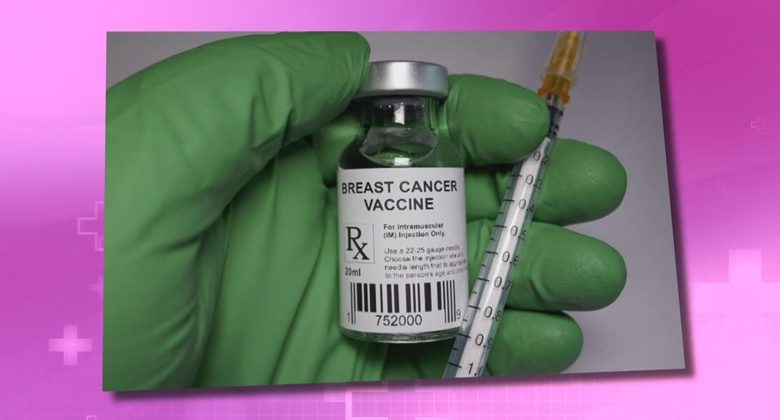
The most common cancer in women, and one of the deadliest, may be eradicated in future. The development of a breakthrough vaccine, which researchers say could eliminate breast cancer, wrapped up its Phase 1 clinical trial this week. More than 75% of women showed a strong immune response, as measured by antibodies on their white blood cells. The vaccine is aimed at both preventing and treating breast cancer, which affects one in eight women. “It’s very exciting,” said Dr. Amit Kumar, CEO of Anixa Biosciences, which is developing the vaccine along with the Cleveland Clinic.
During the trial’s first phase, researchers gave the vaccine to 35 women, most of them with triple-negative breast cancer, the most lethal form. It’s the type that famously led Angelina Jolie to undergo a preventative double mastectomy at 37, after finding out she had the genetic mutation for the disease. The women had their blood drawn periodically to measure the level of antibody production against alpha-lactalbumin, the molecule targeted by the vaccine. Researchers said the only side effect observed was irritation at the injection site.


“It’s a very new mechanism and we think that if this works and can prevent cancer, then we can perhaps eliminate breast cancer as a disease, just like we’ve done for polio and various other infectious diseases.” “Cancer vaccines have been very, very difficult to develop,” he added. “There’s never been a successful true cancer vaccine.” Unlike vaccines for infectious diseases, which target organisms foreign to the body like viruses, cancer is a different ballgame since it grows out of a person’s cells. “The cancer cells arise out of your healthy cells … so the immune system is not able to see very distinctly that the cancer cell is a bad cell.”
Research in cancer vaccines has mostly targeted proteins that show up in higher concentration on cancer cells — but that’s resulted in the immune system also attacking healthy organs that display the protein. But something unique to breast cancer is one of the proteins in the cancerous cells — the lactation protein alpha-lactalbumin — is not present during most of a woman’s life, except in pregnancy and breastfeeding.
So a scientist at the Cleveland Clinic had the idea two decades ago to target alpha-lactalbumin and vaccinate women not planning to have any more children, which led to the trial. The study, which was seen as breakthrough medical research, is receiving funding from the US Department of Defense. Kumar hopes it’s not impacted by the current federal funding cuts. Researchers plan to present their findings to the Department of Defence this year.