When it comes to cooking and healthy fats, ghee and butter are two popular choices found in kitchens worldwide. While both are derived from milk, they differ in their preparation, nutritional composition, and culinary uses. Whether you’re looking for a rich, nutty flavor or a creamy spread, understanding the differences between ghee and butter will help you make the right choice based on your dietary needs.
What is Ghee?
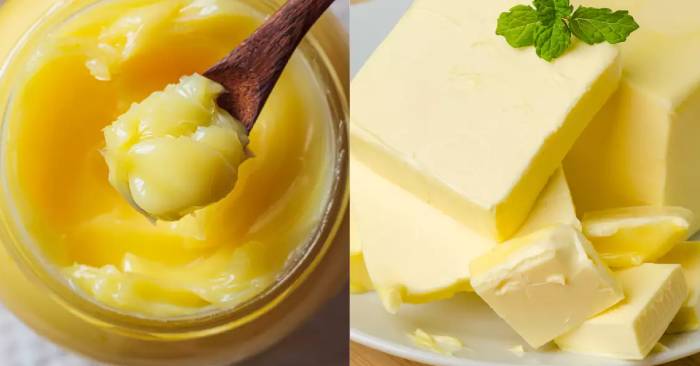
Ghee is a form of clarified butter, meaning it is heated until the water content and milk solids are removed, leaving behind pure butterfat. This process gives ghee a longer shelf life, a higher smoke point, and a unique, nutty aroma. It is widely used in Indian cuisine and Ayurveda, known for its numerous health benefits.


How to Make Ghee at Home
-
Melt 450g of unsalted butter in a pan over low heat.
-
Allow it to simmer while removing the foam that forms on top.
-
Cook until the milk solids settle at the bottom and turn golden brown.
-
Strain the liquid through a cheesecloth or coffee filter into a glass jar.
-
Store at room temperature and use as needed.
Health Benefits of Ghee
-
Rich in Vitamin A: Essential for eye health, skin, and immunity.
-
Good for Digestion: Contains butyric acid, which supports gut health.
-
High Smoke Point: Ideal for frying and sautéing without burning.
-
Low in Lactose: Suitable for people with mild dairy sensitivities.
What is Butter?
Butter is made by churning cream until the fat separates from the buttermilk, creating a smooth, creamy spread. It has a lower fat content than ghee (about 80% vs. ghee’s 99%) but contains small amounts of milk solids and water. Butter is commonly used in baking, cooking, and as a spread.
How to Make Butter at Home
-
Leave fresh cream at room temperature and mix it with ¼ cup yogurt.
-
Refrigerate for 7-8 hours until thickened.
-
Blend the cream until it separates into butter and buttermilk.
-
Strain out the buttermilk and wash the butter with cold water.
-
Store in an airtight container and enjoy!
Health Benefits of Butter
-
Contains Vitamin A & K2: Supports bone health and immune function.
-
Source of Healthy Fats: Provides energy and helps absorb fat-soluble vitamins.
-
Natural Antioxidants: May help reduce inflammation and improve overall health.
Ghee vs. Butter: Which One Should You Choose?
-
For High-Heat Cooking: Ghee is better due to its higher smoke point.
-
For Baking and Spreads: Butter provides a creamier texture.
-
For Lactose Sensitivities: Ghee is a better option as it has little to no lactose.
-
For Ayurvedic and Keto Diets: Ghee is preferred due to its digestion-friendly properties.
Both ghee and butter have their own unique benefits, and the choice between them depends on your dietary preferences and cooking style. If you want a nutty, dairy-free alternative for cooking, go for ghee. If you love creamy textures and traditional flavors, butter is your best bet.