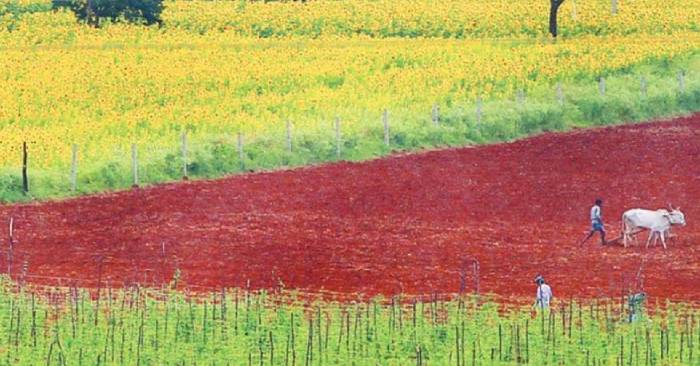
The sunflower fields in Gundlupet, located near the Kerala-Karnataka border, have come into full bloom this spring, drawing tourists from various areas. The expansive sunflower fields create a stunning and festive scenery, enhancing the region’s allure.
Local farmers, whose livelihoods depend on flower farming, are hopeful for a bountiful harvest this season, provided the weather cooperates. They plan to dry and prepare the sunflowers for seeding within the next twenty days if conditions remain favorable.


Recent intermittent rains have caused slight delays in the drying process, but farmers remain optimistic about beginning the harvest by the end of July, weather permitting. Meanwhile, tourists continue to visit, taking family photos against the beautiful backdrop of sunflower fields.
The market price for sunflower seeds ranges from Rs 50 to Rs 70, depending on the size of the flower. While general markets rarely accept sunflower seeds, some mills process them, and major oil companies purchase sunflowers directly from farmers. In addition to oil production, sunflower seeds, leaves, and roots have medicinal properties. Each sunflower measures about 30 cm in diameter.
Sunflowers are usually harvested in May. Oil companies supply seeds to farmers at Rs 2400 for a 5 kg packet, which is enough for one acre. From this, farmers can produce up to five quintals of oilseeds.
Planted in May, sunflowers mature within three months. Transplanting occurs after the seeds are sown. Adequate water during the flowering period is crucial for healthy flowers. Farmers dependent on rainfall often face crop failures due to insufficient rain during the sowing season. Excessive rain after flowering can also negatively impact the crop, delaying the harvesting and drying process and hindering field preparation for the next crop. Farmers are eagerly anticipating a successful harvest, hoping for favorable weather conditions.