
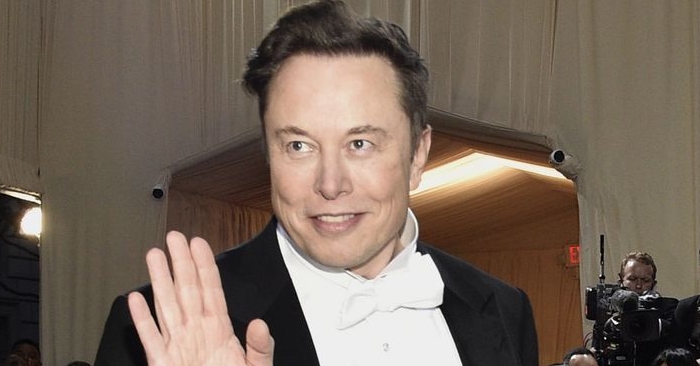
Tesla CEO Elon Musk announced that Neuralink, his brain-computer interface company, is advancing to its second test patient. During a live stream on X, Musk and the Neuralink team discussed their progress in making brain implants widely available.
“We’re only just moving now to our second Neuralink patient,” Musk said. “But we hope to have, if things go well, high single digits this year.”


In January, Neuralink successfully implanted a brain device in Noland Arbaugh, who was paralyzed from the shoulders down after a diving accident eight years ago. Arbaugh has since reported playing chess, the video game “Civilization,” and taking Japanese and French lessons by controlling a computer screen cursor with his brain.
The Neuralink team identified and resolved an issue with the implant’s threads retracting, which reduced their effectiveness in detecting signals. To improve performance, the threads will be implanted deeper and at varying depths in the brain, with increased precision.
Musk emphasized that the technology “is only going to get better from here.” Neuralink is implementing risk mitigation strategies such as skull sculpting and maintaining normal blood carbon dioxide levels in patients. “In upcoming implants, our plan is to sculpt the surface of the skull very intentionally to minimize the gap under the implant,” said Matthew MacDougall, Neuralink’s head of neurosurgery.
Musk envisions Neuralink implants going beyond restoring functionality, aiming to give people enhanced abilities like infrared or ultraviolet vision and telepathic concept sharing. “We want to give people superpowers,” he said. “Not just that we’re restoring your prior functionality, but that you actually have functionality far greater than a normal human.”
He also mentioned developing an automated process for Neuralink’s surgery robot to quickly install custom implants, likening it to upgrades in the games “Cyberpunk” and “Deus Ex.” Musk suggested combining parts of the Optimus humanoid robot with a Neuralink implant to achieve “cybernetic superpowers.”
Musk co-founded Neuralink in 2016 with the goals of enhancing human capabilities, treating neurological disorders, and potentially achieving a symbiotic relationship between humans and AI. Despite competition in the field of brain-machine or brain-computer interface research, Neuralink’s progress continues to draw significant interest and discussion.