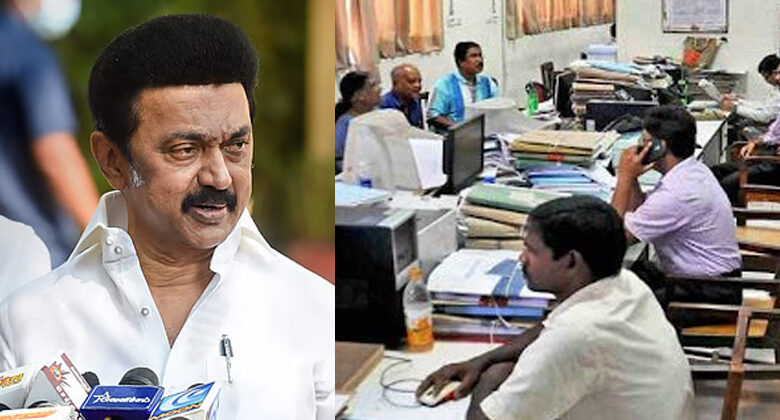
When the DMK returned to power in May 2021, Chief Minister M.K. Stalin pledged a new “golden era” for Tamil Nadu’s government workforce. With a manifesto running into hundreds of promises, the party positioned itself as a champion of salaried employees—teachers, healthcare workers and public servants included. Nearly four-and-a-half years later, as the state heads toward 2026, that promise appears badly frayed, with government employees emerging among the most disenchanted groups under the current regime.
From mounting vacancies to a controversial overhaul of the pension system, dissatisfaction within government services has steadily intensified. Repeated protests across the state point to a growing trust deficit between the administration and its own employees.


Salary revisions have remained elusive, apart from routine dearness allowance (DA) hikes. Even these increases have often been delayed, with arrears stretching anywhere between 18 and 24 months. For teachers, healthcare staff and temporary workers, delayed salaries have become a recurring problem, placing severe strain on household finances.
The annual Pongal bonus—traditionally viewed as a morale booster—has also become a flashpoint. The ₹3,000 payout has drawn criticism from employees who compare it unfavourably with benefits received in earlier years.
Promises on Jobs, Reality of Vacancies
Employment commitments have been another major source of discontent. The DMK had promised the creation of 10 lakh jobs every year and the filling of nearly three lakh government vacancies. Actual recruitment figures tell a starkly different story. In 2021, only about 2,000 posts were filled, while in 2023 the Tamil Nadu Public Service Commission recruited just 1,752 candidates.
At present, an estimated 2.5 lakh government positions remain vacant, including close to 70,000 teaching posts and around 30,000 in the police force. Chronic understaffing has increased pressure on existing employees and weakened service delivery across departments.
Pension U-Turn Sparks Anger
Few issues have generated as much resentment as pensions. The DMK had clearly pledged to restore the Old Pension Scheme (OPS) within a year of coming to power. Instead, by late 2025, the government rolled out the Tamil Nadu Assured Pension Scheme (TAPS), which employees argue closely mirrors the Centre’s New Pension Scheme.
Employee unions have condemned the move as a breach of trust, accusing the government of rebranding rather than honouring its commitment. For workers approaching retirement, the uncertainty has only deepened anxiety.
Outsourcing and Job Insecurity
The expanding use of contract labour and outsourcing has further aggravated tensions. Unions argue that this trend erodes permanent employment, weakens the reservation framework and exposes workers to exploitation.
Temporary employees in education, health and transport departments continue to work without job security or benefits. Long-standing demands for the regularisation of Anganwadi and midday meal workers remain unresolved. Meanwhile, compassionate appointments have reportedly been reduced sharply, leaving families of deceased employees struggling for support.
Allegations of Intimidation
Beyond policy concerns, allegations of harassment and repression have added fuel to the unrest. In 2025, a video from Tindivanam showing a Scheduled Caste government employee allegedly being humiliated by a DMK councillor triggered widespread outrage.
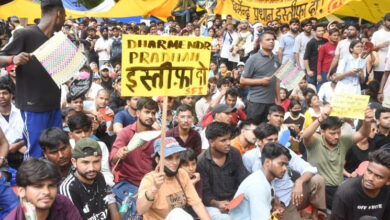
Protests demanding OPS in cities such as Chennai and Coimbatore were met with police action, including lathi charges and arrests. After the 2024 elections, more than 500 revenue department officials were reportedly transferred in what many viewed as punitive action.
Doctors, teachers, revenue officials and transport workers are now voicing shared demands: immediate restoration of OPS, payment of salary and DA arrears, large-scale recruitment, an end to outsourcing, and protection for contract workers.
Trade unions including CITU and AITUC have led repeated agitations through 2025 and early 2026, describing the situation as a breakdown in administrative priorities. Opposition parties—the AIADMK, BJP and PMK—have seized on the unrest, accusing the DMK of delivering only a fraction of its manifesto commitments.
A Political Red Flag
Observers believe the growing anger among government employees represents more than a labour dispute—it is a political warning. Once considered a dependable support base, public servants now feel sidelined and betrayed. As protests erupt across Tamil Nadu, the contrast between electoral promises and governance outcomes has become increasingly stark.
For an administration that came to power pledging dignity, security and fairness for its workforce, the voices on the streets tell a far more troubling story.