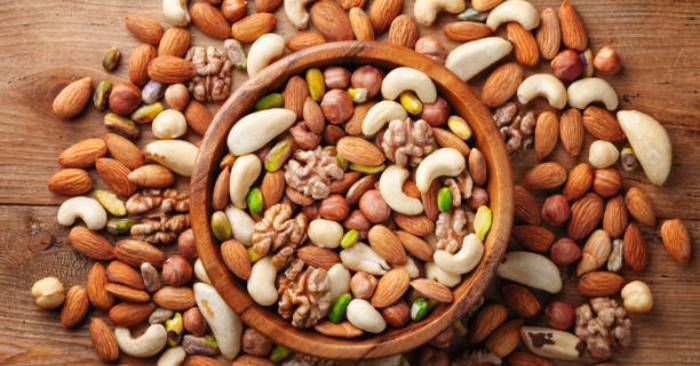
While nuts and dried fruits are often seen as healthy snack alternatives, it’s essential to keep moderation in mind. Many people mindlessly snack on them, believing they are perfectly healthy, but consuming them in excessive amounts can lead to unexpected side effects.
Nuts, such as almonds, walnuts, and cashews, are rich in vitamins, minerals, and antioxidants, which contribute to heart health, digestion, and immunity. However, they also contain natural sugars and calories, which, if consumed in excess, can negatively impact your health. Additionally, nuts flavored with added salt or sugar can do more harm than good. Ayurveda suggests soaking nuts like almonds and walnuts overnight to aid digestion and enhance nutrient absorption. This process also helps remove phytic acid, which can hinder the absorption of calcium and magnesium from nuts.


Certain nuts, particularly almonds, contain high amounts of phosphorous and oxalates, which may pose risks for people with kidney conditions. Dry roasting almonds is another option if soaking is not feasible.
The ideal time to consume nuts is in the morning or as a midday snack. Pairing nuts with fruits can enhance their nutritional value by reducing the glycemic index and improving the absorption of iron.
For a healthy individual, consuming 30 to 50 grams of nuts daily is ideal, which can be split into 15-gram portions at different times. For dried fruits like dates and figs, limiting intake to 15-30 grams per day is recommended. Those with existing health conditions or on medication should consult a healthcare provider before adding nuts and dried fruits to their diet. Lastly, for those looking to lose weight, it’s important to note that nuts are calorie-dense and should be eaten sparingly.