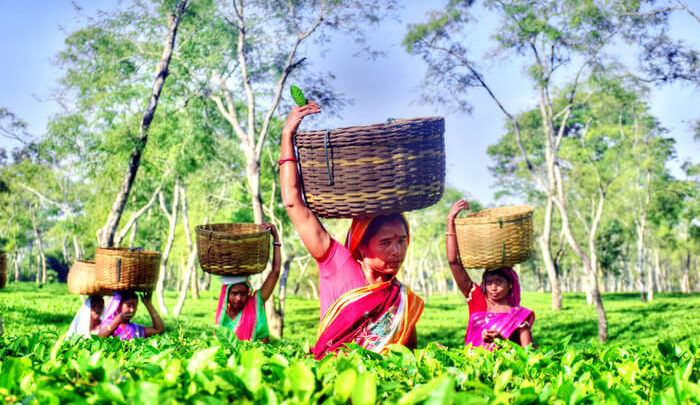
The Indian tea industry is currently embroiled in a major controversy, with exporters and planters raising serious concerns over the alleged blending of inferior-quality imported tea with authentic Indian tea. This practice, according to industry insiders, is harming both the reputation and financial viability of the sector. The unregulated inflow of low-cost tea from countries such as Kenya, Nepal, Vietnam, and Iran is reportedly impacting prices, misleading international buyers, and violating trade regulations.
According to industry stakeholders, certain entities are importing tea at low prices and blending it with Indian tea before exporting it under the “Indian Tea” label—without the mandatory multi-origin tag. This practice not only undermines pricing but also threatens India’s global reputation as a premium tea producer. Experts also claim that the influx of cheap imports is affecting the domestic market, leading to a significant decline in prices despite a shortfall in tea production.


Indian Tea Exporters Association (ITEA) Chairman Anshuman Kanoria has called for a thorough investigation, stating that “a high quantity of tea has been imported duty-free for re-export” and that much of it is being misrepresented as 100% Indian tea, which is against the law. The Tea (Distribution & Export) Control Order, 2005, mandates that any tea exported as “Indian tea” must be entirely sourced from India. Any blend containing imported tea should be explicitly labeled as “multi-origin tea” with clear information on the sources. Additionally, re-exported tea must have at least 50% value addition.
The crisis has led to drastic price drops in the domestic tea market. Indian Tea Association (ITA) Chairman Hemant Bangur highlighted the severity of the situation, noting that the north Indian tea market has seen prices plunge by nearly ₹80 per kg in the last few months. He expressed concerns over India’s sudden rise to become the sixth-largest buyer of Kenyan tea in October 2024, suspecting that much of this imported tea is being rebranded as Indian and exported without proper labeling.
Adding to the concerns, Tea Association of India (TAI) President Sandeep Singhania emphasized that imported tea from Kenya and Nepal is being blended and sold as Indian-origin tea, which is misleading international buyers and damaging the brand value of Indian tea. Industry leaders are urging the Tea Board and the Commerce Ministry to take immediate action to prevent India from becoming a dumping ground for inferior tea.
The issue has gained further traction due to discrepancies in trade data. According to Mohit Agarwal, Director of Asian Tea Company, Kenya’s tea board reported exports of approximately 13.71 million kg of tea to India between January and October 2024. However, the Tea Board of India’s data only accounts for 1.63 million kg of imports from Kenya during the same period—a nearly tenfold discrepancy. Experts believe this mismatch is a result of some merchants failing to report their imports to the relevant authorities, thereby bypassing regulations.
With the credibility of Indian tea exports at stake, industry leaders are calling for stricter enforcement of trade policies. Many are urging the Commerce Ministry to launch a full-scale investigation to ensure compliance with regulations and restore faith in the Indian tea market. If corrective action is not taken soon, the long-standing reputation of Indian tea on the global stage may suffer irreversible damage.