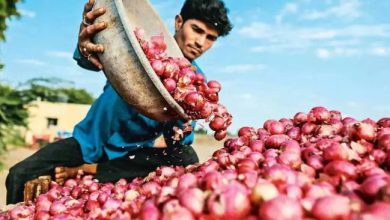
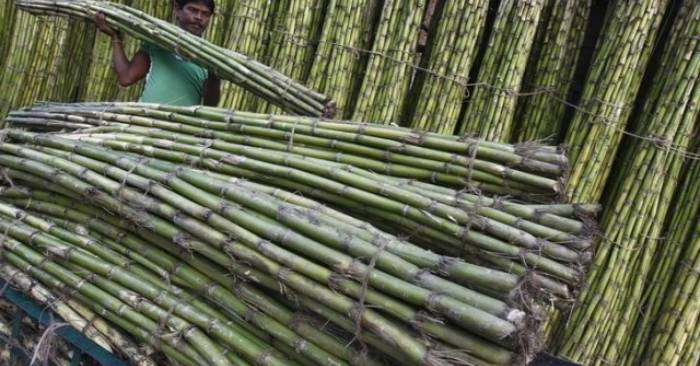
India has witnessed a significant increase in the production of cash crops over the past three years. The production of commercial crops surged by approximately 4,065 thousand tonnes, driven by productivity enhancement schemes and expansion of cultivation areas.
According to Minister of State (MoS) for Agriculture and Farmers’ Welfare Ramnath Thakur, this growth is reflected in the data provided in the Rajya Sabha. The production of cash crops rose from 480,692 thousand tonnes in the agriculture year 2021-22 to 484,757 thousand tonnes in the agriculture year 2023-24.


The Department of Agriculture and Farmers’ Welfare’s third advance estimate for 2023-24 highlights that the total area under cash crops increased from 18,214.19 thousand hectares in 2021-22 to 18,935.22 thousand hectares in 2023-24, marking a rise of 721.03 thousand hectares. Key cash crops include sugarcane, cotton, jute, and mesta.
The National Food Security Mission (NFSM) has played a crucial role in enhancing food grain production by offering support such as cluster demonstrations, improved practices, plant protection measures, nutrient management, and high-yielding variety seeds.
Looking ahead, the Niti Aayog’s 2018 working group report projects food grain demand at 337.01 million tonnes (MT) and supply at 386.25 MT for 2032-33, suggesting a robust position regarding food security.
Among states, Maharashtra leads in the area dedicated to cash crops, covering 5,671.49 thousand hectares out of a total food grain area of 10,727.83 thousand hectares. Gujarat follows with 2,884.94 thousand hectares, and Uttar Pradesh is third with 2,530 thousand hectares.
To further boost production and soil health, the Centre introduced the soil health and fertility scheme in 2015, issuing soil health cards (SHCs) to guide the optimal use of fertilisers. Over 24.17 crore SHCs have been issued, and extensive training programs and fairs have been organized to educate farmers.
Additionally, the Centre’s price policy ensures remunerative prices for farmers’ produce, promoting higher investment and production while protecting consumer interests.