The Central Plantation Crops Research Institute (CPCRI) in Kasaragod has made a significant contribution to agricultural innovation with the introduction of new high-yield coconut and cocoa varieties. These advancements are expected to enhance both production and quality in the regions where they are adopted. The newly unveiled varieties are set to provide farmers with improved crop yields and resistance to common agricultural challenges.
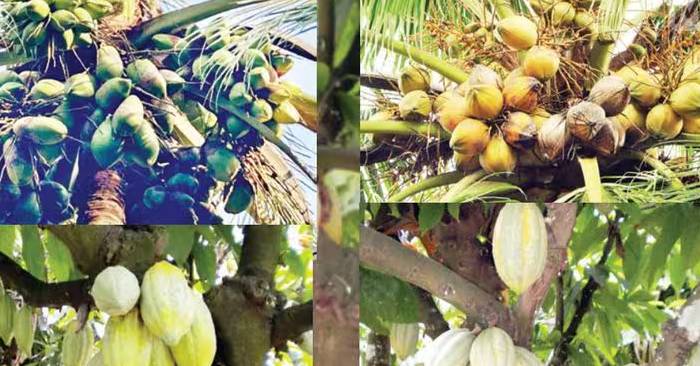
Among the new coconut varieties, Kalpa Suvarna stands out for its versatility and high yield. This dwarf coconut variety is suitable for both copra and tendernut production, delivering an impressive 97 nuts per palm annually, which equates to 17,169 nuts per hectare. The palms start flowering between 30 and 36 months after planting and each tendernut offers about 431 ml of water with a pleasant taste and a Total Soluble Solids (TSS) level of 5.8 °Brix. Kalpa Suvarna is recommended for cultivation in Karnataka and Kerala.


The Kalpasree variety is noted for its high-quality coconut oil and sweet tendernut water, along with its resistance to root (wilt) disease—a common issue in coconut farming. It flowers earlier than many varieties, producing an average of 90 nuts per palm with a copra content of 96.3 grams per nut. Kalpasree is particularly suited for areas in Kerala plagued by root (wilt) disease.
In the realm of cocoa cultivation, the VTLCH-1 and VTLCH-2 hybrids offer substantial improvements. The VTLCH-1 variety produces an average of 50 pods per tree annually, with each pod weighing between 350 and 400 grams, leading to a yield of 1.5 kg of dry beans per tree. This variety is ideal for cultivation in Kerala, Karnataka, Tamil Nadu, and Andhra Pradesh. Similarly, VTLCH-2 also averages 50 pods per tree, with the added advantage of being resistant to black pod rot, tea mosquito bug, and low moisture stress. This resilience makes VTLCH-2 suitable for Karnataka, Kerala, Andhra Pradesh, and Gujarat. These innovations are poised to revolutionize coconut and cocoa farming, boosting productivity and resilience in key agricultural regions.