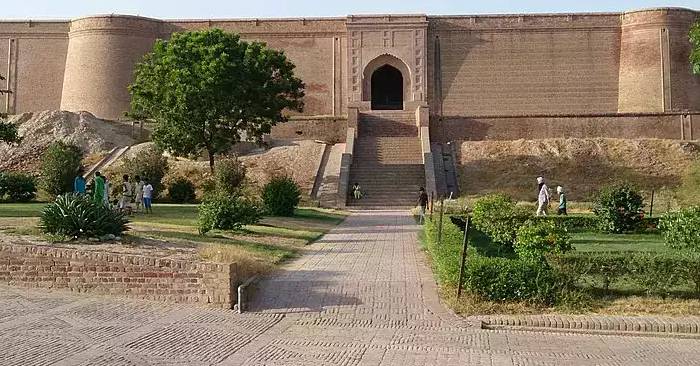
While forts like the Red Fort in Delhi or Amer Fort in Jaipur are popular tourist attractions, Punjab holds a hidden historical treasure that many are unaware of—Qila Mubarak, India’s oldest surviving fort. Located in the city of Bathinda, Qila Mubarak holds centuries of history within its weathered walls, stretching back over 1,900 years. The city of Bathinda, also Punjab’s oldest, serves as the fitting backdrop for this magnificent fort, which was originally constructed between 90-110 AD by Raja Dab of the Kushan Empire.
Qila Mubarak has witnessed the rise and fall of several dynasties, including the Guptas and Mughals. Although little is known about its exact origins, the fort was repeatedly invaded by Mahmud of Ghazni and Muhammad Ghori during their campaigns through Punjab. However, one of the most notable historical moments associated with Qila Mubarak is its role in the life of Razia Sultana, the first and only female ruler of the Delhi Sultanate. She was imprisoned here between 1236 and 1240, before her reign was cut short. Local lore suggests that Malik Altunia, then governor of Bathinda, fell in love with Razia, marrying her and attempting to reclaim her throne, but their story ended tragically.


The fort’s architecture is a striking mix of Indo-Islamic influences, with towering stone walls, impressive gateways, and what remains of its 32 bastions. Among the fort’s significant features is a Gurdwara that marks the visit of Guru Gobind Singh in 1705. Despite its historical significance, Qila Mubarak hasn’t achieved the fame it deserves. The Punjab government has been working to restore and promote it as a key tourist destination, but challenges remain, such as the deteriorating condition of Rani Mahal, which once housed royal queens. Restoration efforts have been slow, with wooden supports now in place to prevent structural collapse.
Though underappreciated, Qila Mubarak is a must-see for history lovers and travelers eager to connect with India’s ancient past.