
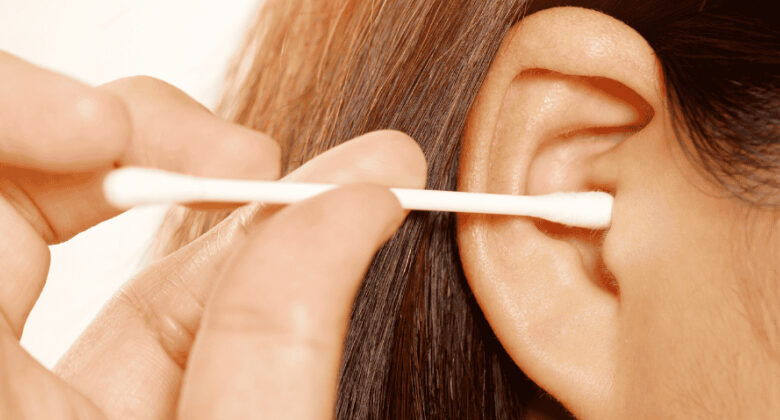
Scientists from the Federal University of Goiás (UFG), a public university in Brazil, have developed an innovative test that uses earwax to help identify cancer at an early stage. Known as the Cerumenogram, the project earned an honorable mention at the 2025 Capes Award and is being recognized for its potential to transform cancer diagnosis.
What makes the test especially promising is that it is non-invasive, inexpensive, painless, and highly accurate. According to the project’s coordinator, professor Nelson Antoniosi Filho, the goal is not only to detect cancer earlier but also to prevent the disease from progressing.


“In oncology, our hope is to improve quality of life by stopping cancer before it even develops,” Antoniosi explained. “This method is simple, affordable, practical, and completely painless.”
The research is based on the idea that earwax carries valuable information about the body’s metabolic processes. When analyzed in a laboratory, its chemical composition can reveal changes linked to illness.
“When someone is healthy, earwax has a specific chemical profile,” Antoniosi said in an interview with Jornal Nacional. “If something is wrong, that profile changes. In that sense, earwax works like a health fingerprint.”
The project began more than a decade ago, initially focusing on the detection of diabetes and cases of drug or pesticide poisoning. The method was later expanded into veterinary medicine, where it proved capable of identifying intoxication and even cancer in dogs.
Over the past ten years, the researchers partnered with Amaral Carvalho Hospital, a major cancer treatment center in Jaú, São Paulo. As the study progressed, results consistently showed strong potential, eventually leading to successful cancer detection in human patients.
In 2025, the team reached an even more significant milestone: identifying pre-cancerous conditions through earwax analysis. This advance could allow patients to receive treatment earlier, often with less aggressive and less painful procedures. Early detection remains one of the most important factors in improving cancer survival rates.
To validate the test, earwax samples were collected from 751 volunteers. Of these, 531 were already receiving cancer treatment, and the test correctly identified the disease in those patients. Among the 220 individuals with no previous cancer diagnosis, five showed abnormal results; all five were later confirmed to have cancer through standard medical exams.
Despite its success, the test is not yet available through Brazil’s public healthcare system (SUS). Antoniosi explained in an interview with Yuvoice that regulatory approvals are still required. For now, the expectation is that the test will first be offered through private healthcare services and public educational institutions.
“I want every public teaching and research institution in Brazil to provide this service to their communities,” he said. “That’s where it should begin, before expanding to the public healthcare system.”
Antoniosi also highlighted the crucial role of public universities in making this breakthrough possible. He emphasized that long-term funding and institutional support—often lacking in private institutions—were essential to the project’s success.
“If this were a private university, I would never have gotten approval to study earwax,” he joked. “They’d probably think I was crazy and fire me.”
Looking ahead, the research team is now investigating whether earwax analysis could also help detect neurological conditions such as Alzheimer’s and Parkinson’s disease. These disorders involve metabolic changes that may also be reflected in earwax composition.
“We’re studying neurodegenerative diseases like Alzheimer’s, Parkinson’s, and other forms of dementia to see if diagnosis through earwax is possible,” Antoniosi told Yuvoice. “The research is still ongoing, but we expect results within a year.”
The Cerumenogram project underscores the impact of Brazilian public science in advancing medical innovation. With new studies underway, this earwax-based test is emerging as one of the country’s most promising scientific developments.