Maruti Suzuki India, Hyundai Motor India and Tata Motors recorded historic sales on September 22, as the first day of the nine-day Navaratri festival coincided with the rollout of the Goods and Services Tax (GST) 2.0 regime. Maruti delivered nearly 30,000 cars on September 22, while there were 80,000 enquiries.
According to the carmaker, this was an unprecedented customer response, being the strongest in over three decades. Hyundai registered around 11,000 dealer billings on day one of Navaratri, its best single-day performance in the last five years. Tata recorded nearly 10,000 car deliveries, a personal best for the company.


Under the new GST structure, the relatively smaller cars (sub-4 metre models) are in the 18% slab, while the compensation cess on automobiles has been completely removed. They earlier attracted a GST of 28% and a compensation cess of 1% to 3%, resulting in a total tax incidence of 29% to 31%.
The bigger models, as well as the luxury cars, have been placed in the 40% slab now. In the GST 1.0 regime, the overall tax on them was between 43% to 50% (28% GST + 15% to 22% compensation cess). While cars across segments have become cheaper in the GST 2.0 regime, companies are also extending additional festive benefits to enhance sales.
Maruti has received nearly 15,000 bookings each day since announcing additional price benefits over and above GST on September 18. The current bookings are now 50% higher than what the carmaker garners in the non-festive season. Among Maruti’s small cars, the S-Presso has become cheaper by up to Rs 1.30 lakh, the Alto K10 by up to Rs 1.08 lakh, the Celerio by up to Rs 94,100, the WagonR by up to Rs 79,600, the Ignis by up to Rs 71,300, the Swift by up to Rs 84,600, and the Baleno by up to Rs 86,100.
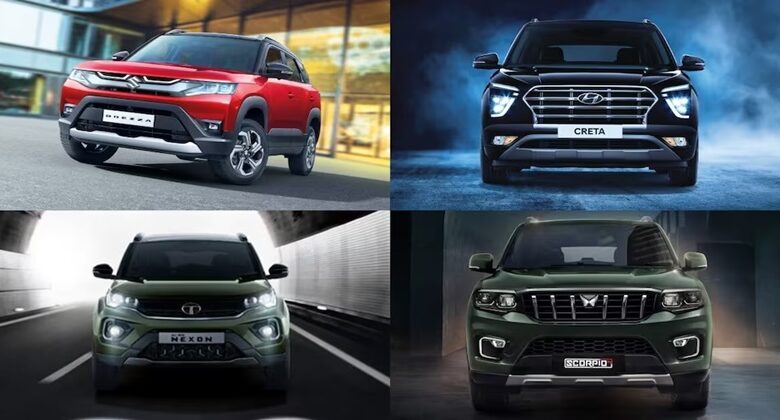
So far as the SUVs are concerned, the price cut is up to Rs 1.13 lakh on the Fronx, Rs 1.13 lakh on the Brezza, Rs 1.07 lakh on the Grand Vitara, and Rs 51,900 on the Jimny. The price drop is up to Rs 87,700 on the Dzire sedan and Rs 46,400 on the Ertiga MPV. Rival Hyundai has reduced prices across its line-up following the GST rate revision, with benefits, depending on the model, ranging from around Rs 60,640 to Rs 2.40 lakh.
The most significant cut comes on the Tucson SUV, which is now cheaper by up to Rs 2.40 lakh. The Creta, Hyundai’s highest-selling SUV, has also seen a handsome price reduction of up to Rs 72,145. The Venue, one of the brand’s most popular compact SUVs, is now lower by about Rs 1.24 lakh. The price drop on the entry-level SUV, Exter, is up to Rs 89,209.
Among sedans, the Verna sees a price drop of up to Rs 60,640 and the Aura of up to Rs 78,465. In the hatchback space, the i20 has become more affordable by as much as Rs 98,053, while the performance-oriented i20 N Line is cheaper by Rs 1.08 lakh. The Grand i10 Nios, Hyundai’s entry hatchback, gets a price cut of up to Rs 73,808.
The total benefits (GST price cut + additional benefits) on Tata cars are as high as Rs 2 lakh at present. It is up to Rs 1.20 lakh on the Tiago hatchback, Rs 1.76 lakh on the Altroz hatchback and Rs 1.11 lakh on the Tigor sedan. Among the SUVs, buyers can avail benefits up to Rs 1.58 lakh on the Punch, Rs 2 lakh on the Nexon, Rs 1.07 lakh on the Curvv, Rs 1.94 lakh on the Harrier and Rs 1.98 lakh on the Safari.