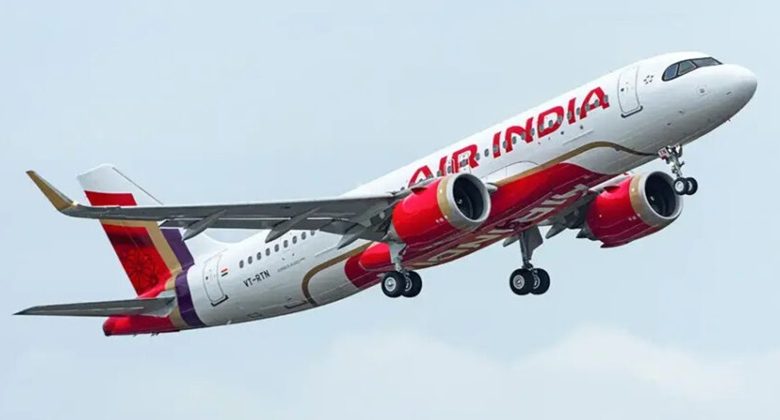
Air India and its parent company, Tata Group, will jointly provide over ₹1.25 crore in financial aid to the families of those killed in the Ahmedabad air disaster. This includes ₹1 crore from Tata Sons and an interim ₹25 lakh from the airline itself. The financial aid was confirmed in a post on Air India’s official X handle. “Air India will be providing an interim payment of ₹2.5 million to the families of the deceased and the survivor,” the airline said. In addition to the compensation, medical costs for those injured, including students at B.J. Medical College, will be fully covered.
Wilson pledged Air India’s full cooperation with the probe and long-term support for victims’ families. “We know that the investigations will take time, but we will be fully transparent and will support the process for as long as it takes,” he said. However, of the 242 people on board, only one survived the crash. Speaking from Ahmedabad, Air India’s CEO Campbell Wilson stated, “All of us at Air India are devastated by this loss and grieve for those affected, near families and their loved ones.” The accident involved a Boeing 787 Dreamliner and occurred shortly after takeoff from Sardar Vallabhbhai Patel International Airport on Thursday.

The aircraft lost altitude at 650 feet and crashed into a student hostel near the airport. In response to the tragedy, Air India has sent over 100 caregivers and 40 engineering personnel to Ahmedabad. Assistance centres have been set up in Ahmedabad, Mumbai, Delhi, and London to support the families of passengers and crew. These centres are coordinating travel, lodging, and psychological care.
A 59-second CCTV recording from a camera mounted at the far left of the runway is now a central piece of evidence. It shows the aircraft lifting off, gaining brief altitude, flying level for a few seconds, and then beginning a tail-down descent 17 seconds into the flight. Notably, the landing gear remains extended throughout. There was no visible fire in the engines. The plane crashed just 33 seconds after takeoff and erupted into a fireball beyond the airport’s boundary wall.
The aircraft crashed into the dining hall of the B.J. Medical College hostel. Steel tumblers and plates, some still containing food, were found among the wreckage. Pieces of the aircraft—wheels, fuselage, and internal parts—were embedded in the walls. Clothes, books, and personal belongings of students were strewn across the floor. By Friday, the smell of jet fuel remained strong as authorities began using cranes to clear debris and charred trees.
While official findings are pending, investigators are examining whether engine thrust was compromised. They are also studying possible issues with flap operation and asking why the landing gear failed to retract. Anti-terror units were dispatched as part of standard protocol, but a bird strike has been ruled out. India’s Directorate General of Civil Aviation (DGCA) has issued urgent directives to Air India. From midnight on 15 June, all Boeing 787-8 and 787-9 aircraft using GEnx engines must undergo one-time pre-takeoff parameter checks.
In addition, Air India must perform electronic engine control tests and fuel system inspections. These measures aim to identify any systemic issues before flights are cleared for takeoff. As grief sets in across multiple cities and families try to make sense of the tragedy, the focus now shifts to accountability. Investigators will analyse the black box data, maintenance logs, and operational records in the coming days. For Air India and the country’s aviation regulators, the findings could have long-lasting implications.