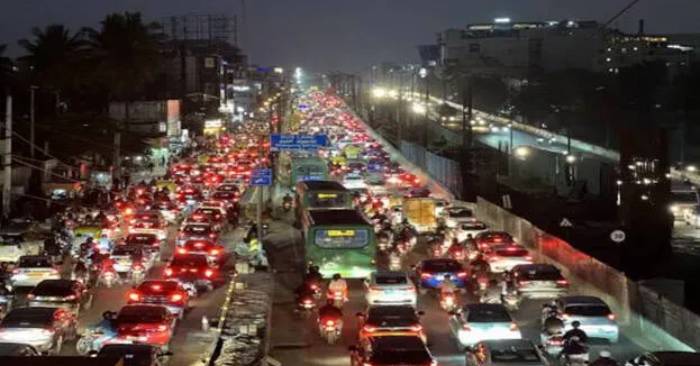
Bengaluru: Bengaluru, known as India’s Silicon Valley, has been ranked as the most congested city in Asia, according to the latest TomTom Traffic Index report. Commuters in the city spend an average of 28 minutes and 10 seconds to travel just 10 kilometers, leading to an annual loss of 132 hours in traffic snarls.
The report highlights rapid population growth and an ever-increasing number of vehicles as the primary reasons for Bengaluru’s traffic woes. Despite its status as a technology and innovation hub, the city’s inadequate transportation infrastructure has turned daily commutes into a time-consuming ordeal for residents.

Close on Bengaluru’s heels is Pune, where commuters spend an average of 27 minutes and 50 seconds to cover the same distance. Other cities with significant traffic challenges include Manila in the Philippines (27 minutes and 20 seconds) and Taichung in Taiwan (26 minutes and 50 seconds).
Experts emphasize the urgent need for urban planners to address these pressing challenges by expanding road networks, enhancing public transportation systems, and adopting smart traffic management technologies. Without timely intervention, the worsening traffic situation risks diminishing the quality of life and reducing economic productivity in these fast-growing cities.
The alarming traffic situation in Bengaluru and other congested cities across Asia underscores the critical need for sustainable urban planning and proactive measures. Introducing efficient public transit systems, encouraging alternative modes of transportation like cycling and walking, and leveraging technology for real-time traffic management are essential steps to mitigate these challenges. Collaborative efforts between policymakers, urban planners, and the public can transform these cities into more livable and productive spaces, ensuring that economic growth is not hampered by mobility constraints. The time to act is now to prevent further decline in urban quality of life.