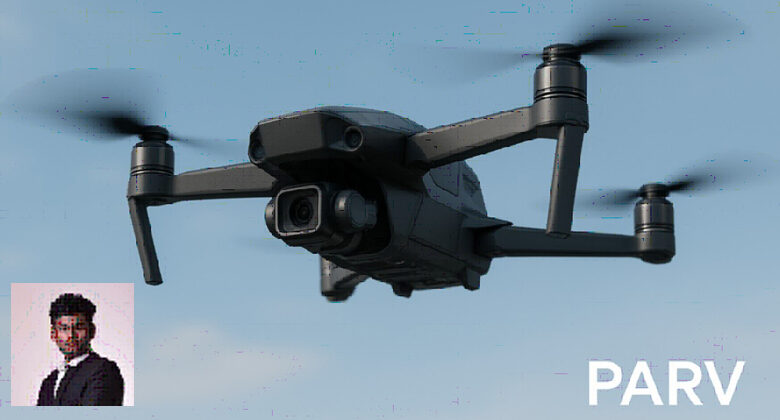
As a mechanical engineering student who’s spent late nights redesigning rotor hubs and running CFD on small propellers, I never thought I’d end up obsessing about counter-UAV systems. But after witnessing how small, low-cost drones change the dynamics of surveillance and the battlefield, I became fascinated by the engineering behind systems that stop them. This article is my technical take grounded in mechanics, thermodynamics, controls, and materials on the latest drone-defense technologies and the open research directions that excite me.
1) Directed Energy (High-Energy Lasers): power density, beam control, and thermal management


High-energy lasers (HEL) are no longer science fiction they are now operational prototypes and fielded systems. From a mechanical engineer’s perspective the hard problems are not “making a laser” but delivering sufficient optical power on a small, moving, low-RCS target while keeping the emitter cool and aligned. Key constraints:
– Power density at the target: damage depends on delivered irradiance(W/cm²) and dwell time. For small carbon-fiber, plastic or polymer-propelled quadcopters, weakening a motor bearing or melting a prop hub requires high localized heating (short thermal penetration depth into polymer substrates) so the laser must maintain mm-scale spot stability for seconds while compensating for aero-vibrations.