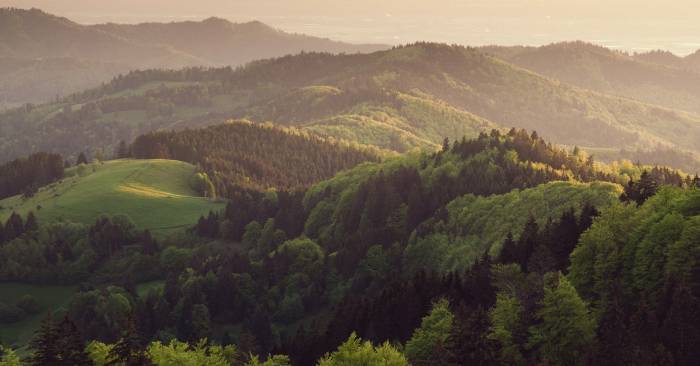
New Delhi: India’s forest and tree cover have expanded by 1,445 square kilometers since 2021, as per the India State of Forest Report (ISFR) 2023. This growth represents 25.17% of the country’s geographical area, reflecting a combined increase in forest and tree cover. While forest cover grew modestly by 156 square kilometers, tree cover showed significant growth of 1,289 square kilometers. Notably, most of the forest cover increase occurred outside the Recorded Forest Area (RFA).
The report highlighted that India achieved an additional carbon sink of 2.29 billion tonnes compared to 2005 levels, aligning with its climate commitments under the Paris Agreement. This progress contributes to the nation’s target of creating an additional 2.5–3 billion tonnes of carbon sink by 2030. Despite these gains, the report revealed the degradation of 93,000 square kilometers of forest between 2011 and 2021.


The ISFR 2023 also incorporated expanded metrics, including bamboo and smaller trees, enhancing its comprehensiveness. Bamboo cover alone increased by 5,227 square kilometers, while Chhattisgarh, Uttar Pradesh, Odisha, and Rajasthan recorded the highest growth in overall forest and tree cover. Conversely, states like Madhya Pradesh and Karnataka faced significant declines.
Despite advancements, challenges persist in addressing forest degradation, especially in ecologically sensitive areas like the Western Ghats. The report underscores the need for robust conservation strategies to achieve the National Forest Policy’s goal of 33% forest and tree cover.