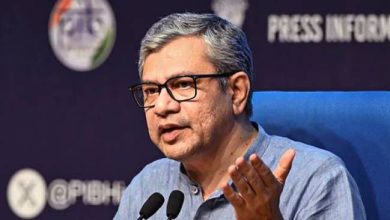
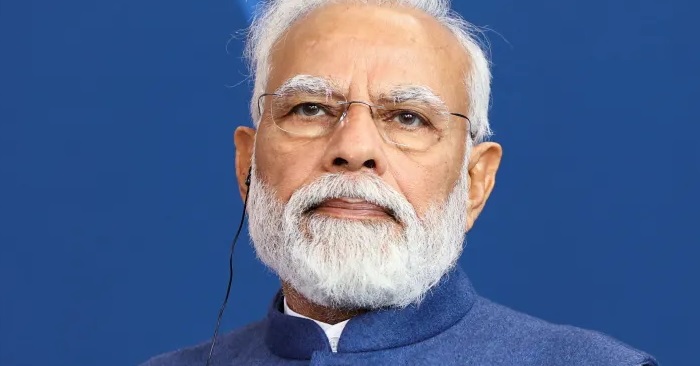
Prime Minister Narendra Modi launched a strong attack on the Congress during his speech in the Rajya Sabha, highlighting the economic stagnation under previous governments and contrasting it with the rapid growth under BJP rule. He criticized the Congress for the economic slowdown that led to the coining of the term Hindu rate of growth, blaming the party’s license-permit raj policies for stifling progress and limiting opportunities. He asserted that India is now experiencing a Bharat rate of growth, with the country emerging as the fastest-growing major economy.
Accusing the Congress of prioritizing family first over national interests, Modi alleged that the party’s leadership engaged in economic mismanagement that hurt India’s global image. He claimed that the term Hindu rate of growth was unfairly used to tarnish an entire community, while the real issue was corruption and inefficiency within Congress-led governments. He further criticized the party’s historical decisions, including imposing the Emergency, which led to widespread human rights violations, censorship, and the suppression of opposition leaders, artists, and intellectuals.


Modi reiterated that the BJP’s governance model is based on sabka saath, sabka vikas (collective growth and development for all), contrasting it with Congress’ approach of appeasement politics. He stated that while previous governments exploited caste and economic divisions for political gain, the BJP-led administration has implemented policies like the 10% EWS quota without creating societal divisions.
Referring to the Uniform Civil Code (UCC), Modi argued that its implementation aligns with the vision of India’s Constitution makers. He said that while some political groups oppose it for electoral benefits, his government is committed to fulfilling the constitutional mandate.
The Prime Minister also took a dig at Congress leaders, particularly Rahul Gandhi, suggesting that they invoke the Constitution while failing to respect its principles. He recalled how Jawaharlal Nehru curtailed free speech by amending the Constitution soon after Independence. Additionally, he cited instances of Congress stifling dissent, including banning certain artists and intellectuals who did not align with their ideology.
Modi concluded by urging all citizens to work towards making India a Viksit Bharat (Developed India), emphasizing that it is a shared responsibility beyond political affiliations. He declared that the country is now breaking free from past economic stagnation and emerging as a global power, thanks to policy reforms and governance focused on holistic development.