
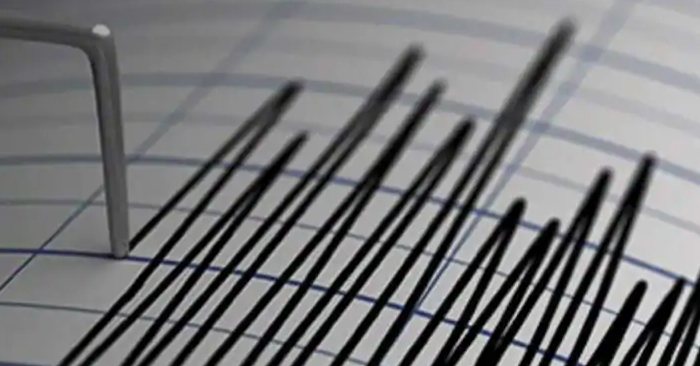
Kathmandu: In the early hours of Friday, a powerful 6.1 magnitude earthquake struck Nepal, sending tremors across parts of India, including Bihar, Siliguri, and Sikkim. The quake, which hit at 2:51 a.m. local time, caused widespread panic as residents felt strong shaking, prompting many to rush out of their homes.
The National Earthquake Monitoring and Research Centre confirmed that the epicentre was in Bhairavkunda, Sindhupalchowk district, approximately 65 km east of Kathmandu. People in Patna, Darjeeling, and other border regions of India and Tibet also reported feeling the tremors. Videos shared on social media showed ceiling fans swaying and buildings shaking.


Despite the intensity of the quake, no immediate reports of casualties or significant structural damage have emerged. However, local authorities and disaster response teams are actively assessing the situation and urging residents to remain vigilant for possible aftershocks.
In a separate event, a 4.5 magnitude earthquake was also recorded in Pakistan at 5:14 a.m., adding to the seismic activity in the region.
Nepal’s High Seismic Risk
Nepal sits in one of the most seismically active zones in the world, classified as Seismic Zones IV and V. The country lies on the boundary where the Indian tectonic plate is continuously pushing into the Eurasian plate at a rate of approximately 5 cm per year. This persistent movement generates immense underground stress, often triggering earthquakes.
Compounding the risk, Nepal’s fragile geological structure, dense urban population, and unregulated construction practices make the region particularly vulnerable. The 2015 earthquake, which registered 7.8 in magnitude, claimed over 9,000 lives and caused extensive destruction, highlighting the need for better disaster preparedness.
Though Friday’s earthquake did not cause immediate devastation, authorities have warned residents to stay alert for aftershocks, as secondary tremors are common after major seismic events. Nepal’s disaster response teams continue to monitor the situation, and further updates are expected as assessments progress.
Meanwhile, the German Research Centre for Geosciences recorded the earthquake with a slightly lower magnitude of 5.6 and a depth of 10 km (6.21 miles), indicating minor variations in seismic readings. Regardless of the exact magnitude, this event serves as a stark reminder of Nepal’s earthquake vulnerability and the ongoing need for improved infrastructure and preparedness.