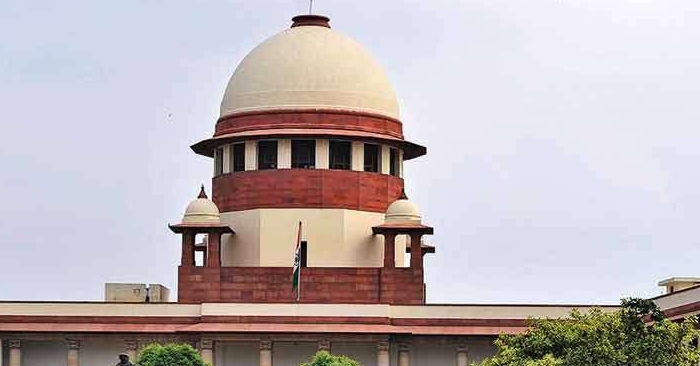
New Delhi: Today, a five-judge Constitution bench of the Supreme Court is set to deliver its much-anticipated verdict on the constitutionality of Section 6A of the Citizenship Act, an amendment introduced in 1985 as part of the Assam Accord. This provision specifically addresses citizenship issues arising from the influx of migrants into Assam following the 1971 Bangladesh Liberation War. The bench, headed by Chief Justice DY Chandrachud, includes Justices Surya Kant, MM Sundresh, JB Pardiwala, and Manoj Misra.
Section 6A establishes the legal framework to grant Indian citizenship to migrants from Bangladesh who arrived in Assam between January 1, 1966, and March 25, 1971. While seen as a humanitarian measure in response to the Bangladesh War, the provision has faced legal challenges, with petitioners arguing that it violates the core principles of secularism and fraternity enshrined in India’s Constitution.


Senior advocate Shyam Divan, representing the petitioners, contended that Section 6A disrupts the constitutional fabric by setting different standards for migrants in Assam compared to the rest of India. Petitioners also called for a nationwide, court-monitored policy to address the settlement and rehabilitation of migrants.
The central government, in its defense, admitted in an affidavit that illegal migration data is difficult to obtain due to the secretive nature of the issue. However, it provided some figures, noting that over 17,800 migrants from Bangladesh were granted Indian citizenship under Section 6A between 1966 and 1971.
The Assam Accord was signed in 1985 to address the region’s migration issues, and Section 6A was introduced to formalize its provisions. The National Register of Citizens (NRC) exercise, launched in Assam to identify illegal immigrants, was carried out under this section. The 2019 final NRC list excluded 19 lakh people, further raising concerns about citizenship and legal status in the state.
The outcome of this verdict will have significant political and social implications, particularly in Assam, where debates around migration have long shaped the region’s socio-political landscape.