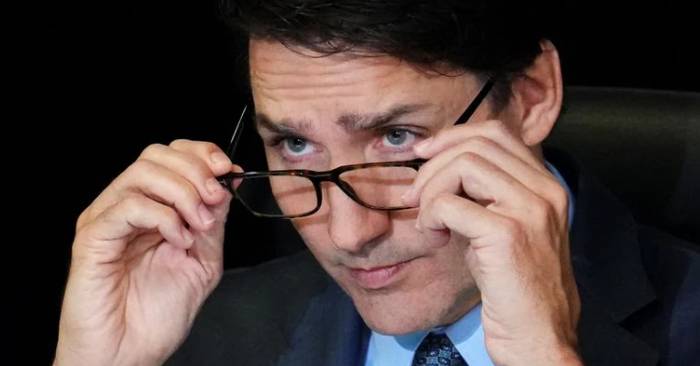
Ottawa: Canadian Prime Minister Justin Trudeau has admitted that his government lacked solid evidence when accusing India of involvement in the killing of Khalistani terrorist Hardeep Singh Nijjar. During a hearing on foreign interference, Trudeau acknowledged that the claims were based on intelligence rather than concrete proof, despite India’s repeated requests for evidence. This admission has sparked embarrassment for Trudeau and further strained diplomatic relations between Canada and India.
Trudeau stated that while there was “credible evidence” of India’s involvement, it was mainly intelligence-based, with no substantial proof. He also mentioned the alleged connection of gangster Lawrence Bishnoi to Nijjar’s killing. In the wake of these claims, Trudeau has faced mounting pressure from both Indian officials and his own political allies, many of whom are calling for his resignation. Long-serving Liberal MP Sean Casey publicly urged Trudeau to step down, citing widespread frustration within the Liberal Party.


Trudeau’s leadership is facing increasing criticism from his caucus, with several Liberal MPs voicing concerns about his handling of the situation. Political analysts suggest that this internal dissent marks a turning point for Trudeau’s leadership, particularly as his government grapples with allegations of foreign interference in Canadian politics.
The situation has further fueled speculation that Trudeau’s accusations against India may have been politically motivated. India’s Ministry of External Affairs (MEA) has criticized Trudeau’s government for allegedly targeting India for domestic political gains, especially in light of the ongoing inquiry into foreign interference in Canada. The MEA has suggested that the accusations serve an anti-India separatist agenda that Trudeau has pandered to for political advantage. In response, India has recalled its High Commissioner and other diplomats from Canada.