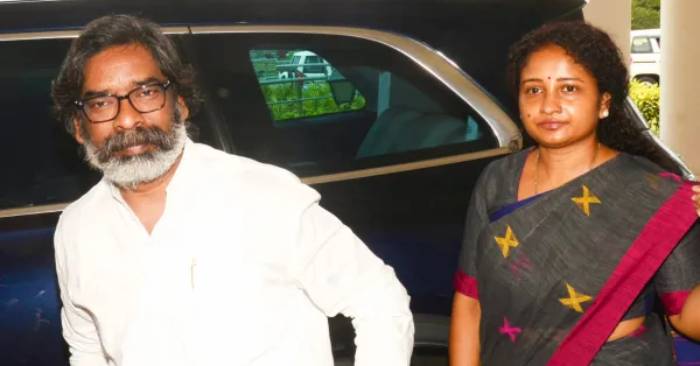
The political scene in Jharkhand has long been shaped by the Soren family’s influence, but their hold on power is now facing increased scrutiny and controversy. The recent marginalization of Champai Soren, a key figure in the movement for Jharkhand’s statehood, highlights the nepotism and internal power conflicts within the Jharkhand Mukti Morcha (JMM). This situation has sparked questions about whether the Sorens are more focused on preserving their family legacy than the welfare of the state.
Champai Soren, a major contributor to Jharkhand’s state formation, played a leading role in the movement alongside other leaders like the late Shri Binod Bihari Mahto. Despite his efforts, Champai has found himself sidelined in the party he helped build. His brief tenure leading a coalition government aimed at stabilizing the state and improving welfare was cut short when Hemant Soren, Shibu Soren’s son, returned from jail and reclaimed control. This power shift has been seen by many as a betrayal, especially given Champai’s role in holding the party together during difficult times.


The Soren family’s governance has drawn increasing criticism for prioritizing their own interests over Jharkhand’s needs. Hemant Soren’s return to power was marked by an assertion of control, with little regard for those who supported the party during his absence. Allegations of corruption against both Hemant and Shibu Soren have worsened public disillusionment, as many view the family as more interested in maintaining power and wealth than in genuinely serving the state.
The monopolization of the JMM by the Soren family has marginalized other key leaders and highlighted a broader issue within the party. The fight for Jharkhand’s statehood was a collective effort, but the narrative has largely focused on the Sorens, overshadowing figures like Shri Binod Bihari Mahto. This concentration of power within the family has limited the party’s internal diversity and alienated many of its supporters.
As discontent grows among Jharkhand’s citizens, there is increasing frustration over the persistent power games within the JMM. The repeated sidelining of capable leaders like Champai Soren, combined with ongoing corruption, has led many to question whether the Sorens are fit to lead Jharkhand into the future. The family’s determination to hold onto power appears to be harming both the party and the state, leaving the public to wonder whether the Sorens will finally prioritize Jharkhand’s development over their personal interests.