DEHRADUN: In a major push toward strengthening social security for the state’s informal workforce, the Uttarakhand government has aggressively expanded its welfare outreach for construction workers over the past twelve months. Driven by a robust Direct Benefit Transfer model, the state has disbursed an impressive ₹93.06 crore over the past year alone, directly benefiting 24,323 workers under various welfare initiatives designed to provide financial stability to the state’s daily wage earners.
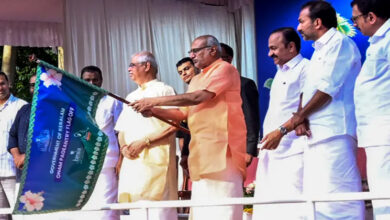
The latest momentum in this campaign was marked by a distribution ceremony held at the Chief Minister’s official residence. Chief Minister Pushkar Singh Dhami cleared a single-transaction transfer totaling nearly ₹11 crore, which went straight into the bank accounts of more than 4,400 registered labourers under the Uttarakhand Building and Other Construction Workers Welfare Board. By utilizing the direct transfer mechanism, the government aims to eliminate middlemen, bypass bureaucratic bottlenecks, and ensure cleaner, quicker, and more accessible financial assistance on the ground.


The disbursed funds specifically target a wide range of essential, life-linked necessities for worker families, offering timely relief without the burden of procedural delays. This financial support covers critical milestones and hardships, including maternity benefits, educational financial aid for the children of labourers, post-marriage assistance for family members, and post-death grants to provide immediate relief to grieving households.
Alongside the financial release, Chief Minister Dhami directed state officials to widen awareness of these welfare schemes and ensure that outreach camps are organized systematically across all districts so that no eligible worker is left out. He also called for essential materials to be made available much closer to worksites, reducing the physical and financial burden on labourers who frequently have to travel long distances for support services.
To bridge this gap permanently, the focus has shifted heavily toward health, education, and accessibility. The government has ordered regular health check-ups for workers and structured welfare camps specifically to extend educational support to their children. The administration is expanding these workplace welfare camps to bring registration, benefits, health services, and essential materials directly to the construction sites, making access significantly easier for migrant and informal workers who cannot afford to lose a day’s wages.
As the financial scale of these welfare schemes expands, the Uttarakhand government is simultaneously tightening its monitoring frameworks to maintain high accountability. Greater use of technology and enhanced verification systems have been introduced to ensure complete transparency in implementation. State officials emphasized that these strict, technology-driven checks are explicitly designed to streamline the delivery process and ensure that public funds land exclusively in the bank accounts of genuine, eligible beneficiaries.