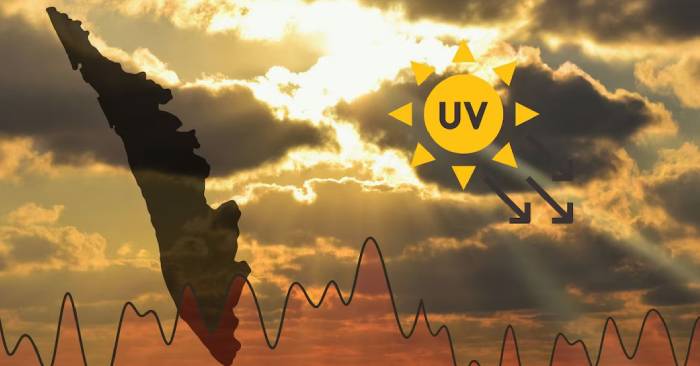
Kerala’s approach to managing sun exposure risks has evolved beyond just issuing heatwave warnings. The Kerala State Disaster Management Authority (KSDMA) now provides real-time alerts on Ultraviolet Index (UVI), ensuring that residents are aware of potential UV hazards. This initiative makes Kerala one of the few states in India to have a structured system for UV level monitoring and public awareness.
The journey toward this system began in 2019 when KSDMA identified the need for UV monitoring following reports of sunburn-related cases. Between 2013 and 2022, Kerala recorded 11 deaths due to heatstroke and sun-related illnesses. Recognizing these dangers, the state government classified heatwaves, sunstrokes, and sunburns as state-specific disasters in March 2019. Given the absence of UV data from the India Meteorological Department (IMD), KSDMA partnered with the United Nations Development Programme (UNDP) to establish 14 ultraviolet radiometers across all districts of Kerala. By October 2020, the system had entered the testing phase, with the State Emergency Operations Centre (SEOC) working on a heat action plan based on their findings.


To ensure continuous data collection and dissemination, KSDMA collaborated with the International Centre for Free and Open Source Solutions (ICFOSS). Kerala already had a micro-climate monitoring system tracking rainfall, temperature, and humidity. The integration of UV data into this network was facilitated through LoRaWAN technology—a low-power, wide-area networking protocol. This system allows for real-time updates every 15 minutes, with the collected data stored on a cloud-based platform for analysis and public access.
Each UV sensor, mounted on a 1.5-meter pole, is calibrated to measure and relay UV intensity at regular intervals. The system automatically uploads this data, making it available for visualization and public awareness. This enables individuals to take necessary precautions against prolonged sun exposure.
The UVI system is based on global guidelines established by the World Health Organization (WHO), the United Nations Environment Programme (UNEP), and the World Meteorological Organization (WMO). The index categorizes UV levels into five color-coded groups: Low (0-2, green), Moderate (3-5, yellow), High (6-7, orange), Very High (8-10, red), and Extreme (11+, violet).
Recent data analysis has revealed varying UV levels across Kerala. High-altitude regions, such as Munnar, have recorded “Very High” UVI levels due to reduced atmospheric absorption of UV radiation. Studies indicate that UV intensity increases by approximately 10% for every 1,000-meter rise in altitude. A long-term study (2004-2022) conducted by researcher Ninu Krishnan Modon Valappil in collaboration with KSDMA found that over 79% of recorded UV levels in Kerala fell within the “Very High” or “Extreme” categories. Peak UV exposure was noted in March, April, and September, along with heightened levels during the Southwest Monsoon and summer seasons.
Kerala’s innovative UV monitoring system stands as a model for proactive climate adaptation, emphasizing public health and safety. By providing real-time UV alerts, the state empowers citizens to minimize health risks associated with sun exposure, including skin cancer, cataracts, and immune system suppression.