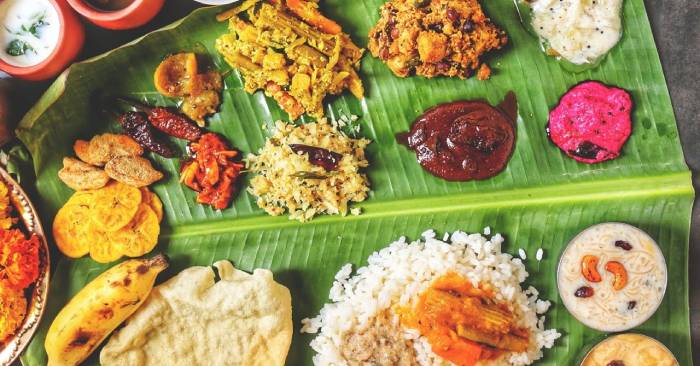
The Onam Sadya, a sumptuous vegetarian feast served on banana leaves, offers a vibrant culinary journey through Kerala’s diverse regions. This guide delves into the distinct variations of the Sadya, reflecting the unique cultural influences from Travancore, Malabar, and Central Kerala. Onam, celebrated on 15 September this year, marks the return of the revered King Mahabali and is a time when community spirit and shared celebrations come to the fore.
Historically, Onam Sadya symbolizes the bountiful harvest and is steeped in tradition. Food Anthropologist Oneal Sabu explains that the Sadya embodies a delicate balance of flavors and nutrients, with each dish contributing to a holistic culinary experience. The banana leaf used in the Sadya not only enhances the presentation but also offers health benefits, including antibacterial properties.


Typically, an Onam Sadya features a minimum of 11 dishes and can extend to over 100 items in elaborate versions like the Aranmula Vallasadya. Coconut, used in various forms, is a staple ingredient, and the dishes are carefully balanced in terms of acids, proteins, carbohydrates, and fats.
Regional Variations:
Travancore: Known for its opulence, the Travancore Sadya includes rich dishes like Boli and Paal Payasam. The influence of royal traditions is evident in its grandeur, making it a celebratory feast rather than a daily meal.
Central Kerala: This region incorporates elements from European, Arab, and other Indian culinary traditions. Dishes like Avial show regional variations, with different ingredients such as bitter gourd in Thrissur and raw mango in Palakkad.
North Kerala: In Kochi, the Sadya features unique dishes influenced by the region’s historical interactions. Fruits like pineapple, which were introduced through the Colombian exchange, are now integral to the Sadya. The Malabar region, influenced by Arabic traders, sometimes includes non-vegetarian items, reflecting a blend of cultural influences.
Temple Sadyas: Temple cuisine, prepared without onion or garlic, highlights the subtle flavors of dishes like Pulissery and Moru Curry. This tradition emphasizes the spiritual significance of the meal.
The Onam Sadya is more than just a meal; it represents Kerala’s rich cultural tapestry and culinary heritage. Each dish on the banana leaf is thoughtfully prepared, reflecting a deep-rooted philosophy of balance and tradition. As Kerala celebrates Onam, the Sadya stands as a testament to the state’s diverse culinary legacy and the unity it fosters among its people.