Vishu, one of Kerala’s most significant festivals, marks the beginning of the Malayali New Year and is intrinsically linked to agriculture, prosperity, and the harvest season. Falling in Medam, the festival coincides with the summer rains that offer relief to the dry land, signaling the onset of the harvest. The day represents equality, as the length of day and night are the same, which is why it’s called Vishu.
The festival is celebrated with much enthusiasm across Kerala, also known as Bihu in Assam and Bisu in other parts of India. Vishu holds special significance due to its connection to ancient Puranic legends, including the tale of Lord Krishna’s triumph over Narakasura, and the symbolic sun’s rise after Ravana’s defeat by Lord Rama.


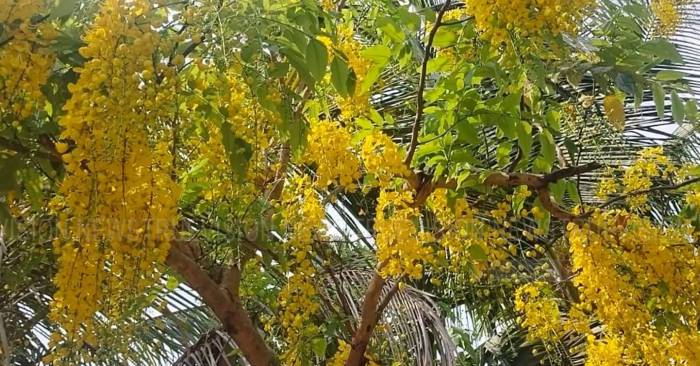
Central to the Vishu celebrations is the preparation of Vishu Kani, an arrangement of auspicious items like paddy, coconut, mango, and kanikonna flowers—the golden blossoms of the Cassia fistula tree, which bloom profusely during this time. These flowers, often referred to as Kerala’s state flower, are integral to the ritual, symbolizing prosperity and wealth.
The kanikonna flowers, which look like golden rain, are arranged in front of a Sri Krishna idol, creating a radiant and auspicious sight. This sight, rooted in nature’s golden beauty, captures the spirit of Vishu, bringing good fortune and happiness to the coming year.