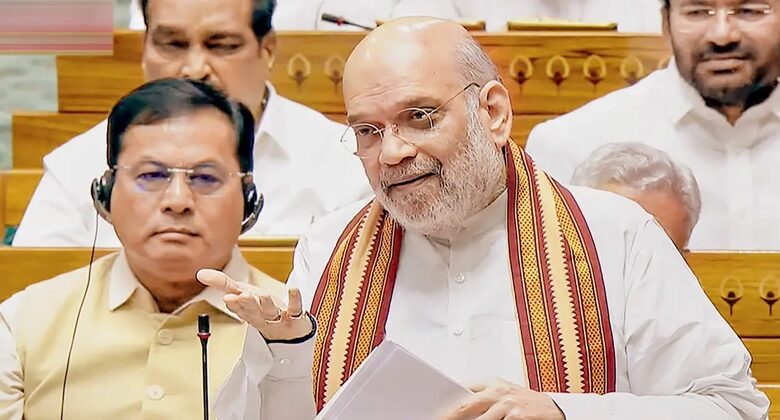
In the ongoing parliament monsoon session the central government is planning to introduce three bills in Parliament on Wednesday, aimed at creating a legal mechanism for the automatic removal of key public office holders—including the Prime Minister, Union Ministers, Chief Ministers, and State or Union Territory Ministers, if they are arrested and detained for 30 consecutive days on serious criminal charges.
The three bills are:


- The Government of Union Territories (Amendment) Bill, 2025
- The Constitution (One Hundred and Thirtieth Amendment) Bill, 2025
- The Jammu and Kashmir Reorganisation (Amendment) Bill, 2025
What is the key provision of these bills?
If any of the above office-bearers are arrested and remain in custody for 30 consecutive days, for offences carrying a minimum jail term of five years, they will automatically lose their position on the 31st day.
Why are these necessary?
Currently, there are no constitutional or legal provisions mandating the removal of a minister or the Prime Minister if they are in jail, even for serious offences. The bills seek to close this legal and ethical gap.
1. The Constitution (One Hundred and Thirtieth Amendment) Bill, 2025
- This bill proposes changes to:
- Article 75 (Union Ministers, including the PM)
- Article 164 (State Ministers, including Chief Ministers)
- Article 239AA (National Capital Territory of Delhi governance)
- The objective is to ensure that arrested public officials facing serious charges do not continue to hold power while under detention.
2. The Government of Union Territories (Amendment) Bill, 2025: It aims to amend Section 45 of the Government of Union Territories Act, 1963, which currently lacks provisions for the removal of ministers or chief ministers in UTs under criminal detention.
3. The Jammu and Kashmir Reorganisation (Amendment) Bill, 2025: This bill seeks to amend Section 54 of the Jammu and Kashmir Reorganisation Act, 2019, for similar reasons, enabling the removal of arrested chief ministers or ministers in the Union Territory of Jammu and Kashmir.
The move appears to be prompted by high-profile cases where ministers or leaders did not resign despite being in jail. Notably, former Delhi Chief Minister Arvind Kejriwal and Tamil Nadu Minister V Senthil Balaji. Both continued in their posts despite being arrested in separate cases, raising questions about accountability and ethics in governance.