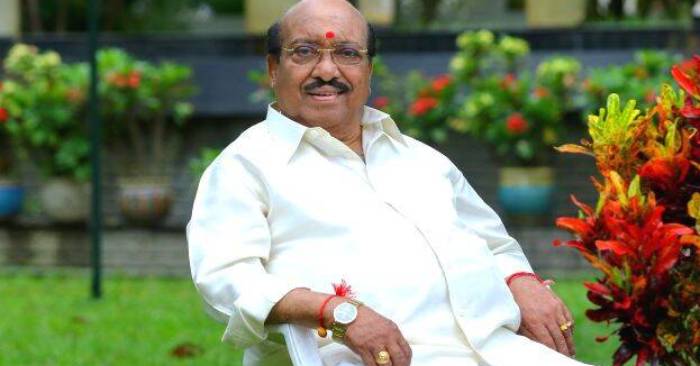
The decision to confer the Padma Bhushan on SNDP Yogam General Secretary Vellappally Natesan has sparked intense discussion across Kerala’s political spectrum. The honour comes at a moment when debates around Vellappally’s political role are already simmering, making the Centre’s move appear anything but routine. For many observers, the award signals more than recognition—it suggests a carefully timed political message.
Vellappally has long been a towering influence within the Ezhava community, one of Kerala’s most numerically significant social groups. With Ezhavas accounting for roughly 22 per cent of the state’s population, their political preferences can decisively shape electoral outcomes. Traditionally, this community has formed a strong support base for the CPI(M). The Padma Bhushan, therefore, is widely viewed as the BJP’s attempt to make inroads into this entrenched constituency.


The strategy is not unprecedented. In Uttar Pradesh, the Centre’s decision to award the Bharat Ratna to Chaudhary Charan Singh ahead of the 2024 elections helped consolidate Jat support and strengthened the NDA’s alliance with the RLD. Electoral data later showed that the move paid political dividends. Many analysts see a parallel in Kerala, with the honour to Vellappally in 2026 potentially laying the groundwork for a broader Ezhava realignment towards the BJP-led NDA.
Vellappally has previously positioned himself as an advocate of Hindu unity in Kerala. His statewide outreach campaign, calling for solidarity across caste lines “from Namboothiri to Nayadi,” eventually led to the formation of the Bharath Dharma Jana Sena (BDJS). The party, headed by his son Thushar Vellappally, has remained within the NDA fold since its inception. Yet, Vellappally himself has maintained a degree of political flexibility over the years.
At different points, he has engaged with the CPI(M) and even lent indirect support to the Left Democratic Front on sensitive issues such as the Sabarimala women’s entry debate. This ambivalence prevented the BDJS from fully emerging as a dominant political force, although it has occasionally played a crucial role in boosting NDA prospects in certain contests.
Despite this, Vellappally’s ideological positions—particularly his criticism of minority appeasement—have often aligned closely with the BJP’s broader narrative. His limited participation in NDA campaigning was seen as a missed opportunity by many within the alliance. In that context, a more explicit alignment with the NDA now appears consistent with his long-held views rather than a sudden shift.
By honouring the SNDP Yogam General Secretary, the Centre is widely perceived as recognising the political importance of the Ezhava community in shaping Kerala’s future. A closer convergence between Vellappally, Ezhava voters, and the BJP could significantly alter the NDA’s prospects in the state.
Recent local body election results already hint at a weakening CPI(M). As the Left’s influence wanes, its traditional support base is likely to seek a viable alternative. Experiences from states like West Bengal suggest that when the CPI(M) declines, both cadres and voters increasingly see the BJP as the only party with the organisational strength to directly challenge the Congress.
In such a scenario, vote division becomes a critical issue. In constituencies where the BJP is the main challenger to the Congress, a fragmented anti-Congress vote only benefits the latter. Strategic consolidation, therefore, becomes essential for those seeking a Congress-free outcome. The BJP believes that through Vellappally Natesan’s influence and a broader consolidation of Ezhava support, this goal may be closer than ever in Kerala.