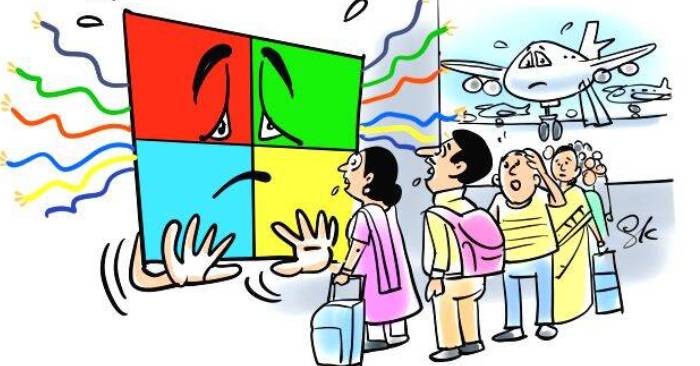
The world is still reeling from the impact of the largest IT outage in history. The breakdown, attributed to US company CrowdStrike’s Falcon Sensor software, brought millions of computers to a standstill on Friday. Although CrowdStrike CEO George Kurtz announced that the issue has been resolved, full recovery from the outage may take some time.
Scientists have termed the crisis a “computer pandemic,” highlighting vulnerabilities in existing computer technology. The outage has raised concerns about the global dependency on Windows and the need for alternative systems to mitigate future risks.


China Unaffected
China is the only major country that escaped the global breakdown, thanks to its reliance on domestic cloud service providers like Alibaba, Tencent, and Huawei. Foreign companies in China using Microsoft services were affected, but the country’s indigenous IT infrastructure, including the “splinternet” governed by the Great Firewall, remained intact.
Hackers on the Prowl
Experts warn that hackers are exploiting the situation by launching fake software and websites claiming to offer fixes for computer malfunctions under the names of CrowdStrike and Microsoft. These malicious programs could exacerbate the situation and lead to a second wave of disruptions.
Flights Cancelled
The outage led to the cancellation of around 1,700 flights on Saturday and 6,855 flights on Friday. The first day’s cancellations left crews stranded in various parts of the world, causing further disruptions. In Britain alone, half a million passengers were stranded on Saturday.
In India, the Ministry of Civil Aviation announced that many services resumed after the fault was fixed on Saturday morning. However, nine flights scheduled to operate from Nedumbassery were cancelled, including six IndiGo flights and three Air India Express flights. Despite the disruption, Indian stock exchanges and clearing corporations were not affected.