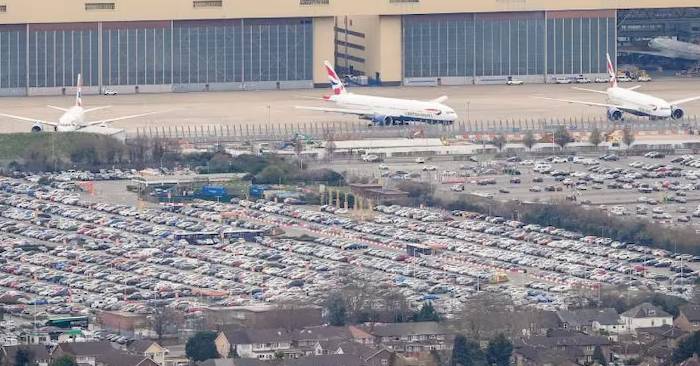
London: Flights at Heathrow Airport resumed late on Friday after a fire at a nearby substation caused a power outage, forcing Europe’s busiest airport to halt operations. The disruption left tens of thousands of travelers stranded, with flights either diverted to other airports across Britain and Europe or returning to their departure points.
The fire broke out on Thursday night, severely impacting the airport’s electrical supply and forcing a complete shutdown. Heathrow, the world’s fifth-busiest airport, was set to handle 1,351 flights and nearly 291,000 passengers on Friday, but the incident resulted in widespread cancellations and delays. Authorities urged travelers to stay away while efforts to restore operations were underway.


Heathrow’s chief executive, Thomas Woldbye, assured passengers that normal operations were expected to resume by Saturday morning. Apologizing for the inconvenience, he emphasized that emergency systems functioned as planned, but some incidents were beyond full control. Investigations by the London Fire Brigade are now focused on the airport’s electrical distribution system.
Impact on Flights and Travelers
Flight Disruptions: Airlines including British Airways, Virgin Atlantic, American Airlines, Air India, JetBlue, and Qantas saw flights either diverted or forced to return to their origin.
Passenger Struggles: Stranded travelers scrambled to make alternative arrangements, with hotel prices near Heathrow skyrocketing to nearly five times their usual rates.
Operational Challenges: With aircraft and crew displaced worldwide, airlines anticipate ongoing disruptions over the coming days.
The incident raised serious concerns over Heathrow’s infrastructure resilience. Aviation experts compared the scale of disruption to the 2010 Icelandic volcanic ash crisis, which grounded 100,000 flights. Critics, including IATA chief Willie Walsh, questioned how a single power failure could shut down such a critical transport hub.
British authorities have pledged a full investigation into the power failure and whether contingency measures were sufficient. The crisis serves as a wake-up call, highlighting vulnerabilities in the UK’s major airport systems.