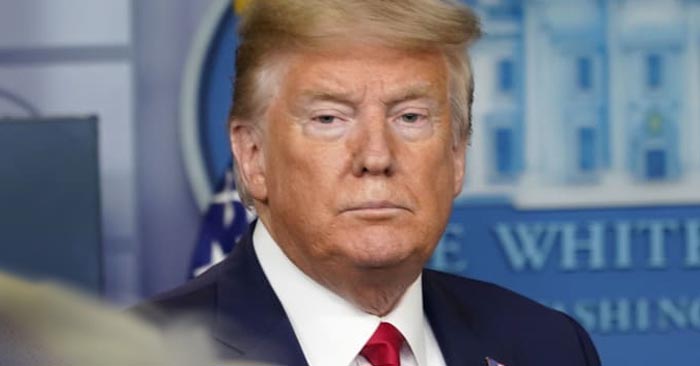
Former US President Donald Trump expressed optimism on Monday that the ongoing Russia-Ukraine war is nearing its conclusion as he met with French President Emmanuel Macron on the third anniversary of the conflict. However, Macron cautioned that any agreement must not lead to Ukraine’s surrender or compromise its sovereignty.
The discussions, held in Washington, underscored the growing divergence in US and European approaches to the war. Trump suggested that Russian President Vladimir Putin is open to accepting European peacekeepers in Ukraine, emphasizing his belief that Putin does not seek further escalation.


“It looks like we’re getting very close,” Trump remarked, hinting that Ukrainian President Volodymyr Zelenskyy might soon visit Washington to finalize an economic agreement. This deal, focused on granting the US access to Ukraine’s critical minerals, is seen as a way to balance the significant financial aid Washington has provided to Kyiv since the war began.
Macron, however, stressed that any peace settlement must ensure Ukraine’s sovereignty and security. “This peace must not be a ceasefire without guarantees,” he stated, reaffirming France’s firm stance against Russian aggression.
Meanwhile, uncertainty looms over security assurances for Ukraine, with Trump offering vague assurances that “Europe will ensure nothing happens,” while a French official indicated that negotiations on security guarantees were still ongoing.
Tensions between the US and Europe were also evident at the United Nations, where disagreements arose over resolutions condemning Russia. The US abstained from its own proposal after France and other European allies pushed for amendments explicitly labeling Russia as the aggressor.
Additionally, Trump’s relationship with Zelenskyy remains strained. Trump has criticized the Ukrainian leader for not engaging in peace talks sooner and for initially resisting the proposed economic deal. Zelenskyy, on the other hand, has accused Trump of operating within a “disinformation space” influenced by Russia.
As Trump continues to reshape US foreign policy, European leaders express concerns about the stability of transatlantic relations. His push to reintroduce Russia into the G7 and his belief that Putin wants a deal signal a significant shift from traditional US diplomatic strategies.
With Trump set to meet British Prime Minister Keir Starmer next, the global response to his evolving stance on Russia-Ukraine negotiations will be closely watched.