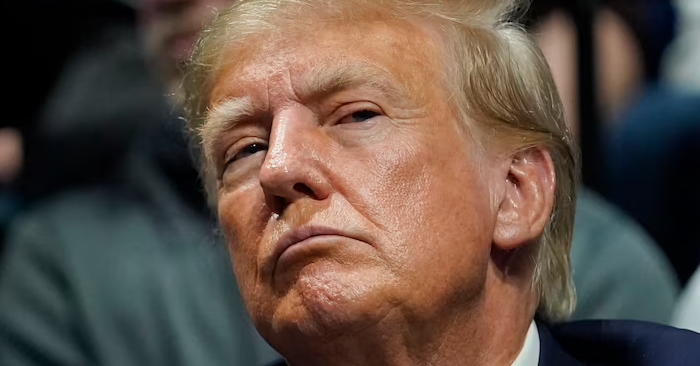
In a bold move fulfilling a long-standing goal of American conservatives, President Donald Trump signed an executive order on Thursday aimed at eliminating the Department of Education. The ceremony, held in the East Room of the White House, saw Trump flanked by schoolchildren as he signed the order, vowing to return education control to individual states. He emphasized that the move would “begin eliminating the federal Department of Education once and for all,” adding, “We’re going to shut it down and shut it down as quickly as possible.”
The Department of Education, established in 1979, cannot be entirely dissolved without Congress’s approval. However, the executive order is expected to severely limit its budget and staff, marking a significant step in Trump’s ongoing government overhaul, which has received support from tech tycoon Elon Musk. Trump’s new Education Secretary, Linda McMahon, was tasked with executing the plan, signaling that she might be the “last secretary of education.”


This move is controversial, with Democrats and educators strongly opposing it. Senator Chuck Schumer called it a “tyrannical power grab,” while others argue it could lead to the dismantling of vital federal education programs. Trump contends that the shift will save money and improve educational standards, claiming the US lags behind countries like Europe and China. He also pointed out that education has long been a battleground in the country’s culture wars, with conservatives advocating for local control rather than federal oversight.
While the White House assures that some federal functions, such as student loans and low-income student grants, will remain, the Heritage Foundation has praised the decision, calling it a “beautiful day” for the dismantling of the Education Department. This move is part of a broader effort by Trump and Musk to overhaul and reduce the size of the federal government, including efforts to curb the US Agency for International Development. Critics, however, argue that it could harm low-income students and civil rights protections in education.